Learnable Moments

By SN Ward Mailliard

Ward Mailliard

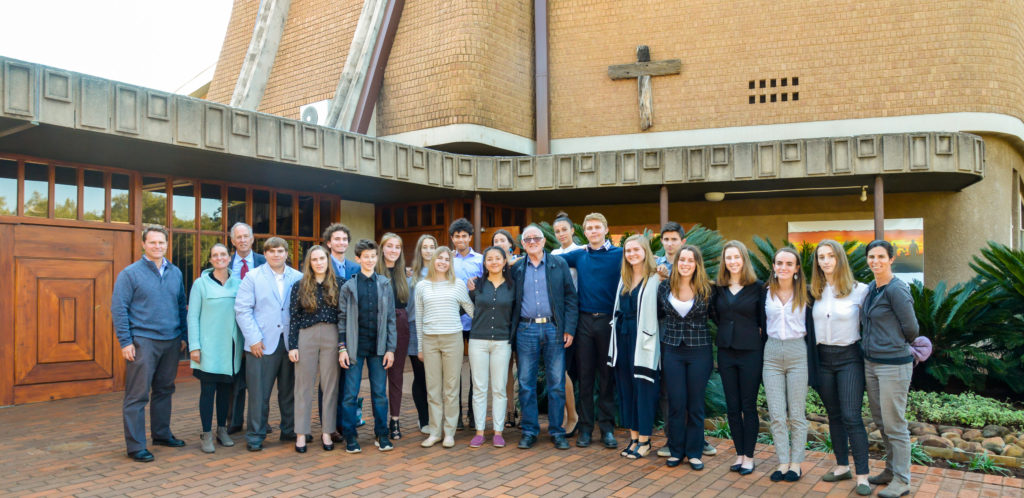
For three decades, the juniors and seniors of Mount Madonna School have traveled to Washington, D.C. every other year to interview government and non-government leaders. This rite of passage introduces our students directly to those who lead in the larger world. Now, for the first time since 1989, we will not be able to take this transformational journey. We all know the reasons. Every day since the necessary “shelter-in-place” changed the natural rhythms of our lives, most of us have experienced loss and limits on a personal level.

If we focus too much on the loss, which is quite real, it can lead to a sense of hopelessness and inertia. It is also unrealistic to think that we can magically recreate the same experience for the students in a stay-at-home world. These are historic times that, for better or worse, provide many unbidden “learnable moments” as we try to answer the question, “What will we do in our response to these inescapable moments of loss?”

As teachers, Shannon Kelly and I felt the only option was to try to find a way to move our interview program forward anyway, and redeem something from a disheartening turn of events by setting up virtual interviews. Would it work? Would people say ‘yes’? Would the students buy in? We can only know the answers by trying.

Some good things have happened on the way to our upcoming virtual journey to Washington, D.C.. The first was a conversation with our friend in South Africa, Thulani Zwane. Thulani was the choir master that led us in an incredible performance experience with his students in the township of Tembisa near Johannesburg last summer. As a musician also in lockdown, Thulani had created a short song promoting COVID-19 awareness and posted it. I loved it, forwarded it to the students and contacted him to set up a Zoom conversation with the seniors. They loved seeing and talking to this vibrant personality, and at the end of it we noticed we all felt better.

Remembering how powerful our journey to South Africa in summer of 2019 was, we thought why not contact the Cloete family who founded Botshabelo Children’s Aids Village where we also visited? We set up a Zoom conversation for the seniors who were excited to talk to them. We had the joy of speaking to these dedicated souls. They told us what is happening on the ground there and about the approaching wave of the virus for which they have few resources and little protection. The students dedicated their allowable percentage of fundraising from our Summit for the Planet “Keep Moving” event to Botshabelo, and we sent funds right away to help with food and mask making. We all felt a lot better.

These conversations with our friends in South Africa inspired a theme for our 2020 Washington, D.C. interviews, “Gaining a global human perspective on the effects of the COVID-19 pandemic.” We will learn by talking to people who have deep commitments to equity and justice around the world and here at home. We can gain a much broader understanding from their reflections and experiences.

Almost everyone we asked for an interview said “yes.” Former Secretary of State, George Shultz, Congressman Jimmy Panetta, President of Vital Voices, Alyse Nelson, President of Running Start, Susannah Welford, Vice President of Refugees International, Hardin Lang, Vice President of the U.S. Institute of Peace, David Yang and The Secretary General for Council of Women World Leaders, Laura Liswood so far.

Hopefully the learning moments will also invoke important learnings based on direct experience that:

·If you can’t do a big thing you can do a small thing – you can do something
·Concern for the needs of others is a great way to reduce your own suffering
·Giving brings joy
·Commitment invigorates
·In the midst of hard times people can be incredibly generous
·Being part of a community is a huge benefit in times of crisis

Please join us on the blog and learn with us.

-SN Ward Mailliard, Shannon Kelly, and the 11th and 12th grade students
Warming up for DC in South Africa

The Importance of Positivity

Thulani Zwane at Tembisa
Haley Kerr

Getting a chance to talk with Thulani Zwane, the choir director from Tembisa in South Africa, this last week felt like a breath of fresh air in the midst of the everyday confusion and fear. Living with so much uncertainty during the COVID-19 pandemic has been hard; when Thulani surprised us on that Zoom call, it brightened up my entire day. His warm energy brought back so many incredible memories from our learning journey to South Africa in 2019, and reminded me how important positivity is, especially in a time like this.

Not only was it fun to get to talk with someone who taught me so much during one of the most influential trips of my life, our conversation also taught me a lot about how the pandemic is impacting different areas of the world. Hearing Thulani explain his experience provided a completely different perspective. He told us about how people in his hometown of Tembisa weren’t paying attention to the shelter-in-place orders. While there are a variety of reasons for this, one main one is that many people do not have enough money to buy a lot of groceries at once, they need to shop each day. Also, the grocery stores are low on food so people cannot stock up. It is important to talk to people in different places in the world during this time so that we hear other perspectives. It also helps us understand that we are in this together. This pandemic is affecting everyone in some way, and it’s important to see that we will get through this, as long as we all work together.


Think About the Present Moment

Paola Jacobs

Recently my class and I had a Zoom call with the founders of Botshabelo in South Africa. I was personally excited for this meeting because I was curious to know how individuals in a different country were doing during the pandemic. I was also excited to reconnect with Marion, Leigh, and Nicole Cloete, and to hear what they are personally dealing with.

It’s easy to get a surface level perspective from watching the news, but it’s another thing when you are able to hear directly from people. Marion told us that she feels like they are waiting for a tsunami to hit them. One thing that struck me is that while COVID-19 is affecting all of us, not all of us are experiencing it in the same way, and as a result, everyone is handling it differently. At Botshabelo, like most South African townships, they don’t have resources. They have no masks or fabric for making them. Marion said, “There is no way we are going to get resources from anyone down here.” They are struggling to live. Marion was blunt, “If you’re poor, you’re dead.” If you live in a township, then the stay at home order is almost impossible. Imagine being cramped in a dark room with eight to ten people, with no electricity. “The hardest part,” Leigh said, “The fear. It’s terrible. We try to hide it from the kids. But what can you do?”

At Botshabelo in 2019

As Marion explained, part of the problem is that many South African people rely on daily work so they don’t have the choice to stop work. She went on to tell us that some of the practices of the people in charge of enforcing the rules are making the situation worse. Many of the officers at the roadblocks where people have to stop and show ID in order to get through aren’t wearing gloves or masks. They touch the IDs and give them back, potentially endangering each person that passes through. Marion said that it’s unsafe to go out and they do not have the materials to feel safe, but they must carry on. They need to take care of their beautiful community. Botshabelo is a strong community. As Marion said, “We can’t run. We have to turn around and face it!”

I am astonished by the resilience of the founders of Botshabelo, and their ability to look at the bright side of things. I am grateful they took the time to talk to us considering all they are dealing with. I’m glad to be able to connect with them again because Botshabelo has impacted me greatly and made me want to help change the problems in the world. I know it means a lot for them to know my class and I are committed to helping them, and it means a lot to me that I can help! Marion brings a light to everything, even in depressing times. She told us, “Think about the present moment. We always plan for our future. Plan every day as a gift. Share and show your love for everybody. We must do what we have to do to wake up and say ‘I love myself’.”


Moments of Laughter and Joy

Noah Tervalon

On Thursday April 16, I woke up tired and ready to get my day started. After sitting through a few hours of Zoom calls I was ready to take a nap. Despite that, I went into the meeting with my ready-to-engage and with my be-happy-about-it face on. Upon entering the meeting, I was met with a familiar face from all the way in South Africa. Thulani Zwane, our choir master, a bundle of joy and happiness, was sitting in one of the little boxes on the screen. I was freaking out at the sight (music is my love and he is a brilliant musician), as I heard Paola say, “Oh my, Thulani!!! What, how are you doing? What’s up? We miss you!!” Mind you, we hadn’t seen him since our visit to South Africa, and we have been singing the songs he taught us nonstop. We have been singing the songs at school, at sporting events, in vans, on school trips, everywhere we could. Seeing him on the screen in front of me was crazy.

While the call was a check in with him to see how he was doing and learn what South Africa is like right now, it was nice to visit with someone who we made a connection with previously. Most of our class has been sending texts back and forth with some of the kids we met, but there is nothing like seeing someone’s face.

Thulani told us about how in South Africa they are being hit really hard because of how they live, and there are so many shortages of food, water, supplies, really everything. He also said they aren’t really able to follow the shelter-in-place orders for a variety of reasons. He went on to tell us about how he has been doing, and showed us his kids, who we hadn’t met, which was really exciting. After that, we said our goodbyes and hung up.

The whole meeting was really inspirational for me. It brought me back into that South Africa feeling a little bit more than when I am just thinking about it. Meeting with Thulani also helped me remember there is plenty of good in the world, even though everything seems like it is dark and crumbling. The whole interaction, and getting a wonderful surprise from our teachers, was a bright moment in what has been a difficult time. Given everything that is going on, being reminded of good times, and having moments of laughter and joy is a very helpful way to keep positive in these trying times.

A New Perspective

Milana Beck

During the last part of our trip, we got to visit the long-awaited and much anticipated safari zone at the Black Rhino Lodge. I have been looking forward to this part of the trip ever since I heard about the South Africa Learning Journey.  I was excited at the amazing opportunity to see the stunning animals up close, in person.

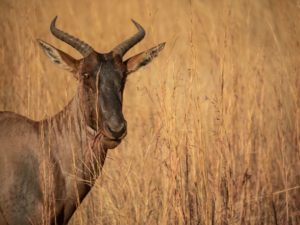
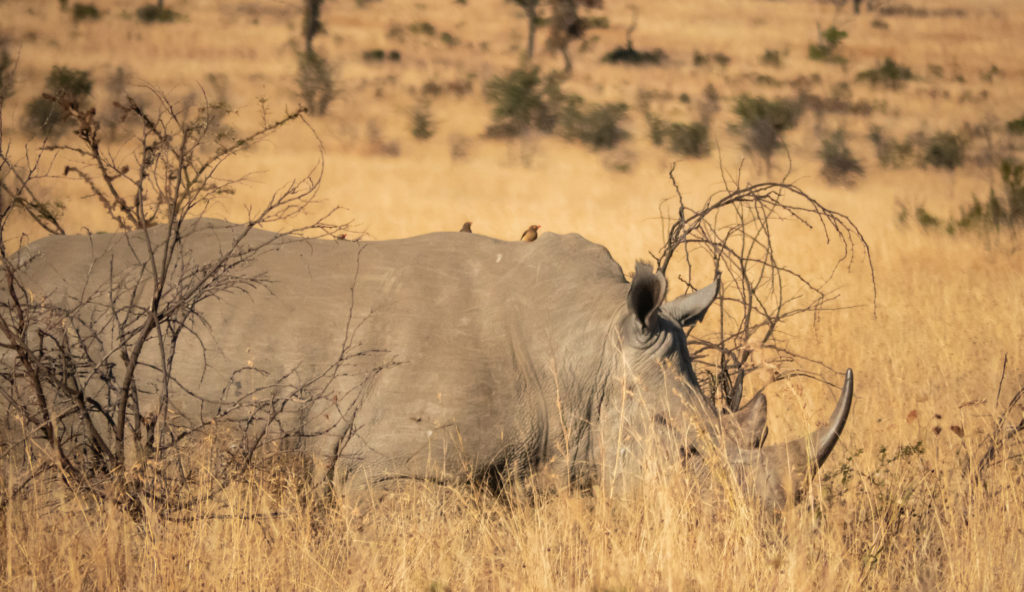
Today, we went on two safaris, one in the morning and one in the afternoon. We saw a variety of animals including elephants, zebras, impalas, baboons, lots of rhinos, and a buffalo and hippo. It truly is a unique experience to see these animals face to face when we are so used to seeing them only in pictures; it is almost indescribable. I feel as though this is the perfect way to end our trip here in South Africa. It allows us to reflect on our experiences here, during our much-needed relaxation, as well as seeing South Africa’s many wonders, the wildlife, in person.


Tabitha Hardin-Zollo

If you have been in the ocean when a whale breaches you’ll know the feeling of being completely humbled. That feeling of connection with the earth and the animal in front of you, it makes you feel so incredibly small, but in the best possible way. Seeing an elephant is just the same, but on a scale about fifteen times as big. Elephants are strong, and can crush without effort, but they don’t. They walk the earth taking what they need and leaving the rest alone, peacefully living in harmony with the environment they are surrounded by. It’s a majestically humbling experience. As the four gentle giants crossed the road in front of our jeeps, on our first safari, the world just kind of stopped. Every expectation, want, and need just slipped away in the presence of these animals. For me, the sight was overwhelming, and it brought me to tears. It saddens me to think that these animals can be subject to such torture by humans, when they are so incredibly peaceful. 

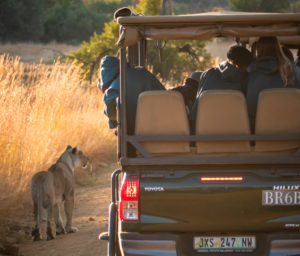
Lions are just as incredible, not in a humbling way, but in an empowering way. When Russy, our guide, got the call that a lioness was spotted, our Jeep took off. Speeding down the winding roads, dust billowing up behind us, excitement in the air. However, that rush is transformed when the lioness is spotted. Everyone is quiet, as the strong cat, undisturbed walks down the path. The lioness has so much physical strength, she could kill in one single bite; but she doesn’t. She simply continues on her way, ignoring the jeeps and cameras. The lioness knows her strength, and knows when to use it.  

You can learn so much from observing animals. The elephants are humbling. Lions are empowering. Impalas are mighty. Zebras are observant. Rhinos make you appreciative of people who want to save the earth. We can all remind ourselves how important these qualities are while watching the animals. 

After seeing the power of oppression and destruction that human kind has wielded, in the the form of apartheid, it is hopeful to be immersed in a place untouched, for a few short days. Seeing the vast valleys and peaks, unharmed by humans, filled with thriving ecosystems and gentle giants, gives me hope. Hope that humans have humanity, and that there are people dedicated to preserving nature.

On our last early morning safari ride, the sun rose over Pilanesberg Park and I finally realized the power of gaining a new perspective. A new perspective can change the way you see anything from money, to humanity, to even simply the sun.

No Longer Silent

Braeden Will

Today we met with Professor Piet Meiring. He is a professor of Theology and also served on the Truth and Reconciliation Commission (TRC) in South Africa. He’s someone who was a part of the attempt to heal what could be healed post-apartheid. His work, and the work of the TRC, resulted in 27,000 people having their stories heard, and for some, finally finding peace. Professor Meiring is a rather humble person; he preferred not to start the interview by telling about himself but rather asking us what we had done and seen on our trip. Once his stories and the treasure of memories of his time on the TRC started, there was no mistaking that he was of the highest caliber of person.

Professor Meiring told us the story of a person who was seeking amnesty for his actions during apartheid. This individual wanted to meet with one of the people he had wronged. The woman in question was the mother of someone who he had personally killed and whose body he had burned at the stake, while he and his comrades had a barbeque. They then dumped the ashes of the person in the river. As a result, the family had nothing to bury. He had done all of this, and now he wanted to meet with that family to apologize. He now believed that Jesus had died for his sins, and he had made his peace with God, but he needed to make his peace with the people he had wronged. The mother said she wanted nothing to do with him but that she would tell her family and let them decide because she was not the only one hurt by his actions. She went home and the brothers said that they wanted to meet this man and soon enough the whole community wanted to see him. So, they met. They filed into a church filled with anger and spite, wanting to tear down and destroy this man. He got up on the podium and repeated his reason for needing to meet them; he felt ashamed by his actions. The whole church was silent until one man in the back stood and walked down the aisle. He came right up and said, I will forgive you. Just like that the whole community stood and a queue formed and each one came and forgave him. The brother of the man he killed came and said that even though he had killed his brother, he would be his brother now.

I think that story encapsulates the power the TRC had to reconcile and foster forgiveness and peace. I also think that interviewing Professor Meiring was a fitting end to our journey. We started by interviewing Thulani Mabaso and hearing his struggle against apartheid. We then interviewed Mamphela Ramphele who gave us insight into how the movement succeeded. We went to Botshabelo and into Langa and Soweto and saw the scars that apartheid left behind, and then we interviewed Piet Meiring who gave us information about how South Africa is trying to rectify and heal. He showed us the beautiful future being built by the rainbow people of South Africa.


JT Curland

Today we saw a rhino but that isn’t the headline. Before coming to the Black Rhino Safari Lodge, we had the chance to sit down with Piet Meiring, one of the members of the Truth and Reconciliation Commission. In this interview, we were able to find out about what it was like trying to repair a country left broken by apartheid. We also learned how it felt to be in the field trying to find solutions and reparations for the atrocities committed. One thing that stood out to me immediately was when he stated that listening to people’s accounts of how they were wronged under this unjust system was so psychologically draining that the members of the commission and translators were offered therapy.

The interview touched our hearts. I learned so much hearing about the power of forgiveness and the healing that comes from having your story told. I’ll leave you with the words of one man who got to tell his story to the TRC. He said that when he was locked up the officer torturing him said sneeringly, “You can scream as loud as you want, no one will hear you.” When he told his story to the TRC, he smiled knowing that the whole world could hear him. His voice was no longer silenced.

Happiness Creates Happiness

Ksenia Medvedeva

I don’t think I will ever enjoy singing as much as I did today. So far, our time at Tembisa has been full of talent, music, and warm-hearted kids who are thrilled to engage with us. As soon as my feet hit the dusty pavement, on our first day, I was swept away into a crowd of embraces and greetings. The kids at the Moses Molelekwa Performing Arts Center were buzzing with curiosity and the willingness to make connections with us. 

Out of the sea of friends I made, one stands out. I met this kid named Thabang, and let me tell you he could make absolutely anyone and everyone laugh. A tall and rather lanky kid, he was hard to miss in a crowd. Honestly, my classmates and I were in conversation with him every chance we got. I will miss him and his overuse of, “guys!” very much.

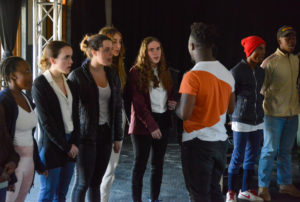
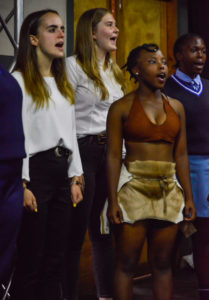
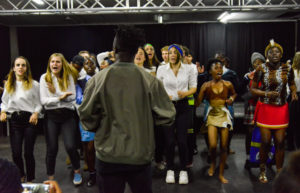
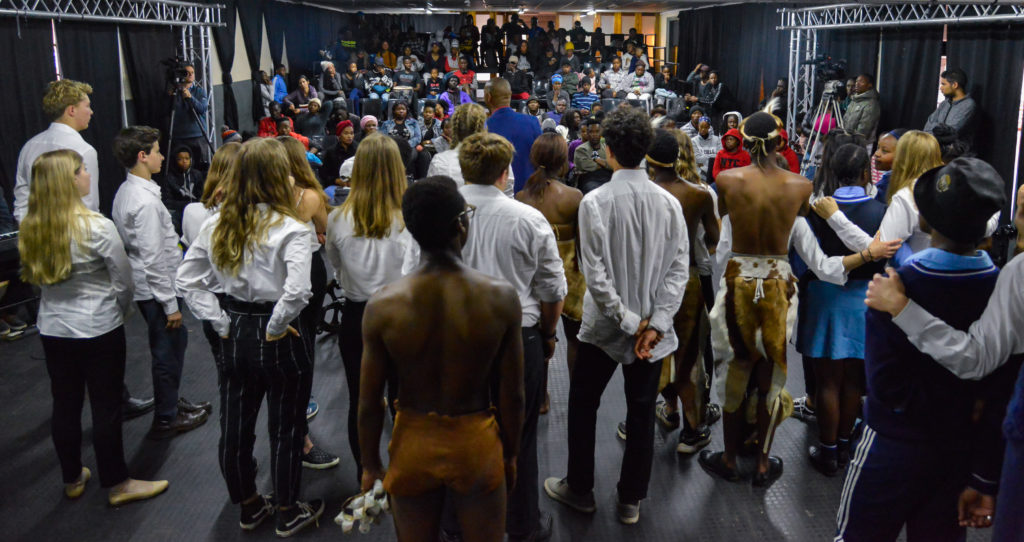
It was during our last performance that I felt the most connected with our newfound companions. As our voices blended together as one, into a harmonious smoothie of sound and rhythm, I scanned the half circle that we had formed and felt a bolt of inspiration and empowerment. There was a silent energy that continued to build, all the way up to the very last song of our performance. Thulani, the choir director, informed us that it was a song that he himself composed. It was a tribute to the thousands of youth that marched through the streets of Soweto in June of 1976, as a means of protesting an apartheid law which enforced the use of the Afrikaans language in schools across South Africa. Towards the end of the song, we began to chant fiercely and march out into the crowd, pulling them into our performance. The power of our voices, and the energy that was vibrating all around us, was enough to make the room quake. In that moment, I think I understood why music is so important to me. It conveys emotions that words simply cannot generate. It brings people together. It helps build connections and paints beautiful memories that can be awakened with the simplest melody.

I talked to Thulani after the show, and he told me how he always closes his eyes when he listens to people perform. He explained to me that it showed him each layer to the full mural that was the song. I responded by saying that I understood him, and that his explanation was something that I had understood my whole life but never been able to explain. Along with the souvenirs I’ve bought and memories that I’ve collected, I hope to bring Thulani’s spirit and passion home with me.


Tessa Ortiz

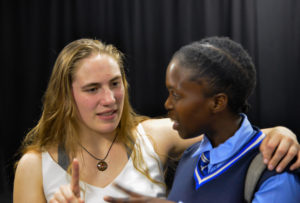
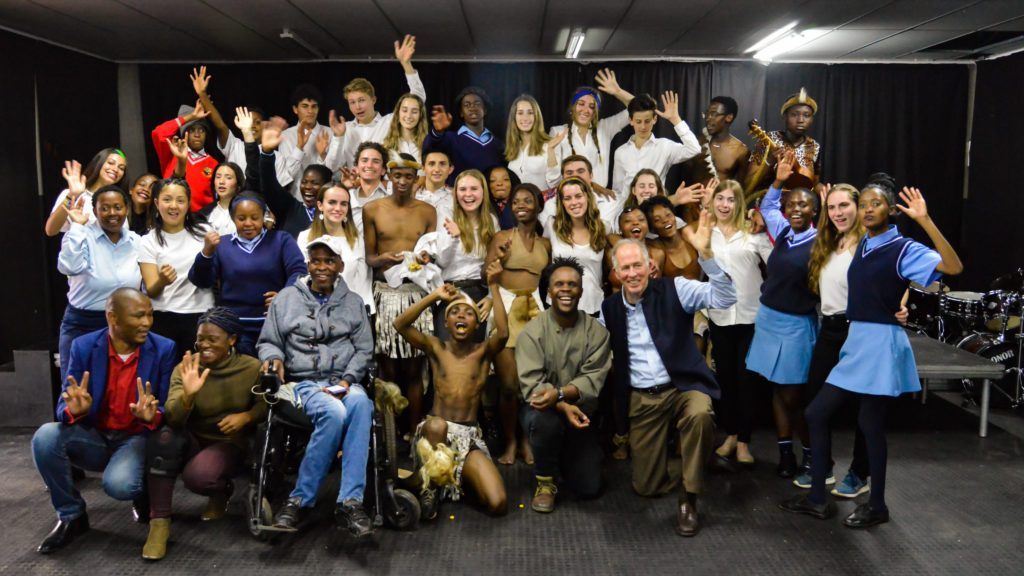
We spent our last day in Tembisa performing with our new friends. We also watched them perform scenes, songs, and dances. I had a chance to meet up with my new friends Zanele, Ellen, Zinhle, Junior, Princess, and many others. I really enjoyed it when they tried to teach me how to speak Zulu; it was incredible. It was amazing how inviting everyone was to a group of students they didn’t know. I met so many people that came up to me with open arms and open hearts. We took pictures together to save the memories.

For the final performance, we walked in one by one. As we started singing, the crowd seemed moved by our expressions and power as a group. We owe Thulani a big thanks for being an amazing teacher. He rearranged several of our songs and taught us new songs in only three days. Our final performance moved our hearts and our bodies by the intensity and meaning of the songs. Most of our songs were chants or calls used in the fight against apartheid. When we got to our finale song, it felt like the whole room just came alive. People began dancing and smiling. We were full of joy, smiling and tearing up, knowing it was our final song together.

Our goodbyes were hard. I think it is amazing that in only three days we built such strong friendships that will last a lifetime. I hope to see them all again someday. I still can’t believe how inviting the kids we met were. In the United States, we are used to being reserved, or observing each other, until we feel safe around new people. Here they want to learn about your culture and teach you about their culture. It’s something you don’t see all the time and we take it for granted. They seem proud of their history. Sometimes I feel ashamed of our past.

One of my new friends that I made at Tembisa said, “I will miss you.” This warmed my heart. I am proud that we had made so many connections across the world and learned that in many ways they are just like us.


Jahnakai Willis

During my time at Tembisa, I learned that I can love a person within ten minutes of meeting them. This turned out to be the case for all the Tembisa students that we sang with. The third day we spent at Tembisa was the day of the performance; the day that would end with excruciating and bittersweet goodbyes. I think I’ve been saying the phrase, “This is the most fun I’ve ever had in my life,” quite a lot on this trip, but our performance was more than fun, was more than exciting, to a point that I can’t even explain.

The day started out with our huge bus pulling up to the now familiar group of dusty buildings and benches, greeted by our new friends in the courtyard. One boy, Sabelo said good morning by blowing everyone away with his insane beatboxing. As we slowly filed in around him, some people were just staring at him in awe, some were bouncing their heads to the beat, and some were strangely dancing. They did not even care what everyone else thought because we all felt so close and felt so much love that there was no judgment. While I have a special place in my heart for the Tembisa kids, I formed a friendship with one girl in particular. Her name meant happiness. Whenever I saw her, or made eye contact across the singing circle with her, she would break into a HUGE smile, making me smile, and we would both start dancing and laughing. I admit this caused Thulani to yell, “No dancing!” once or twice but I must say, Happiness created happiness.

After one of the best shows I’ve ever performed in, all the singers gathered around a man who was giving a speech and during that entire time, me and Happiness just hugged each other. Even though it was just a hug, I knew I had made a friend for life. She was the person who made me realize that I can love a person less than ten minutes after meeting them.

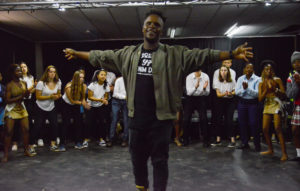
While I should probably be talking about how the performance went, instead I’m going to talk about the magic maker that created the show, Thulani. Thulani is literally one of the most amazing artists I’ve ever met. For some reason, Thulani is the kind of person who has a ridiculous amount of technique for putting things together and making everything that he creates sound stunning. I remember the first day that we walked into his studio and we were greeted by him and all the kids. Thulani asked us to sing for him so he could hear what we had prepared. I thought we did a pretty good job up until Thulani made us listen to the kids sing the song he had prepared, and my mouth fell open. To be honest, I was flushed with a little bit of embarrassment because I could tell he had worked his magic on those students but it also made me 1000 times more excited to learn as much as I could from him. Thulani isn’t the kind of person who gets respect by yelling at kids until they’re scared of him; he gets it from showing them what they can do if they work with him. He makes everything sound so good that even if you absolutely hate singing, you want to get up, clap your hands, sway your hips, and sing at the top of your lungs. With Thulani’s gift, the day of the performance I wasn’t scared or embarrassed whatsoever because I knew that our work with this short, excited, incredible man had prepared us to present our best.