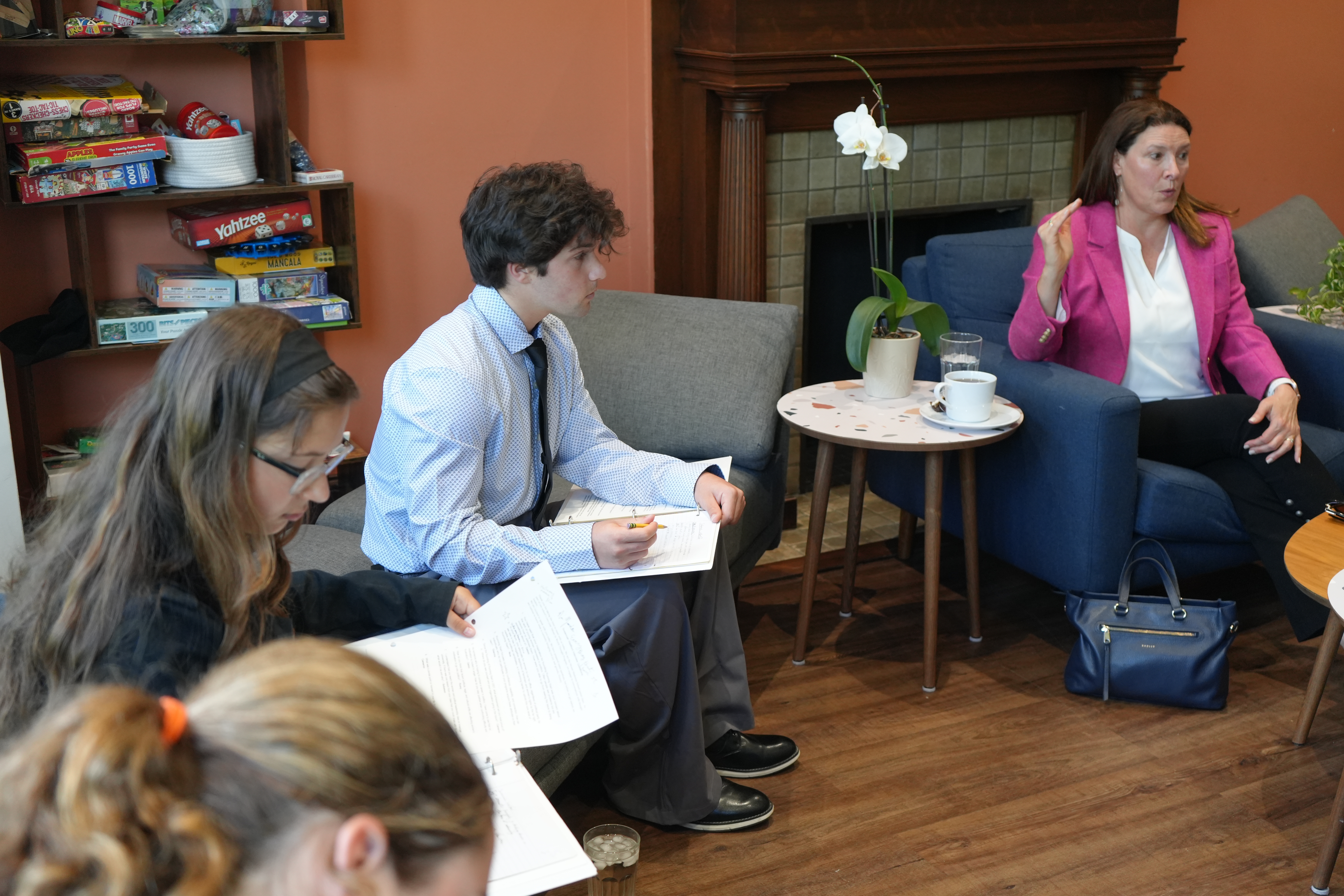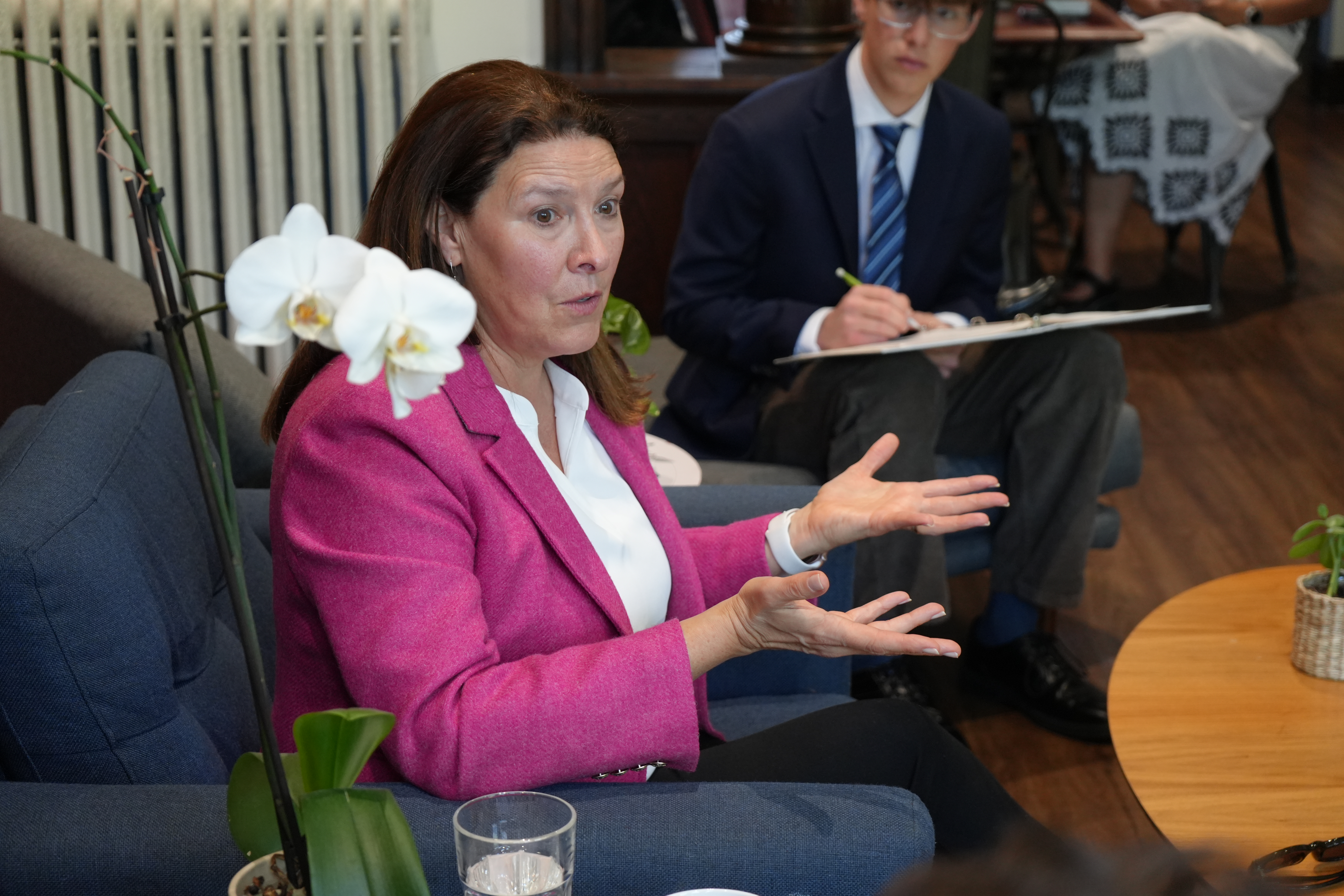
Reasons for Hope

Delmi McWilliams

What Do We Owe Our Future?

Throughout this trip, there’s been a theme of selfless service, of helping others purely from the motivation to do good. We’ve heard about it from almost everyone.
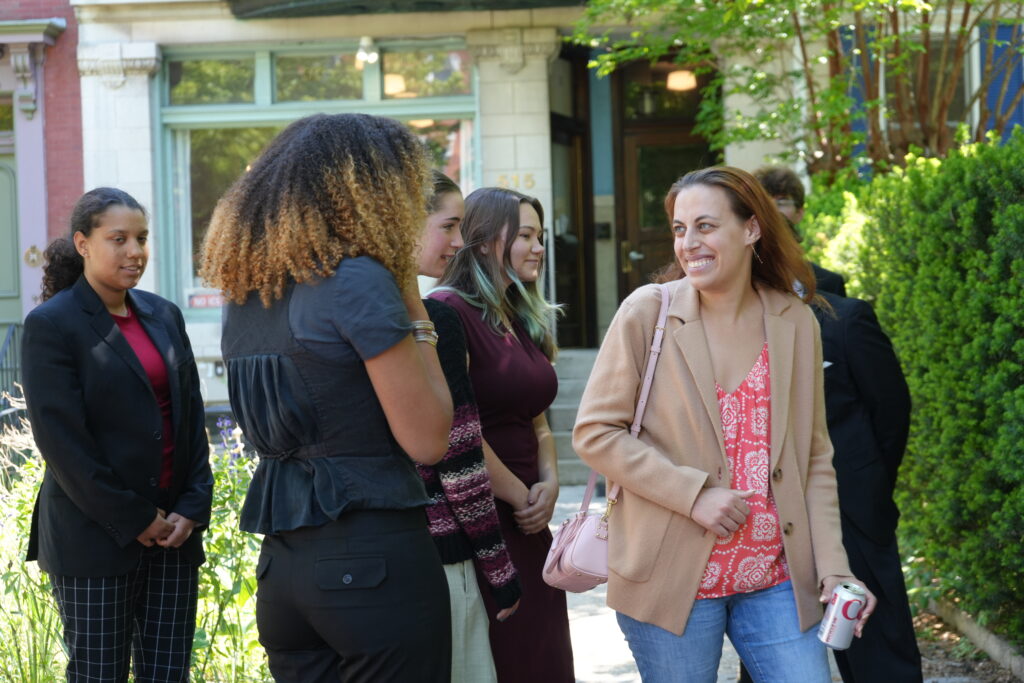

For example, Jimmy Panetta said, “The American Dream … is to provide a better future for our children.” At the Pentagon, we were told about selfless service in the military, and what it truly means to be an American citizen giving back to our country. We also heard from Tracie Potts about the importance of committing to excellence. She told us, “If it’s worth doing, it’s worth doing well,” urging us to commit fully to what we believe in. We talked to Susannah Welford, who told us that she doesn’t think that we can “change minds with anger.” She highlighted the importance of confidence and believing that you can commit to change and service. Today, we spoke to three very different women. But every single one of them left me with a feeling of hope.

These leaders are people who genuinely are committing to service, to change, and they are seeing real results. That hopeless feeling is nowhere to be found. And with the understanding that change and growth are both still very possible and real for this country comes the question: if it’s possible, do we owe it to this country to try?
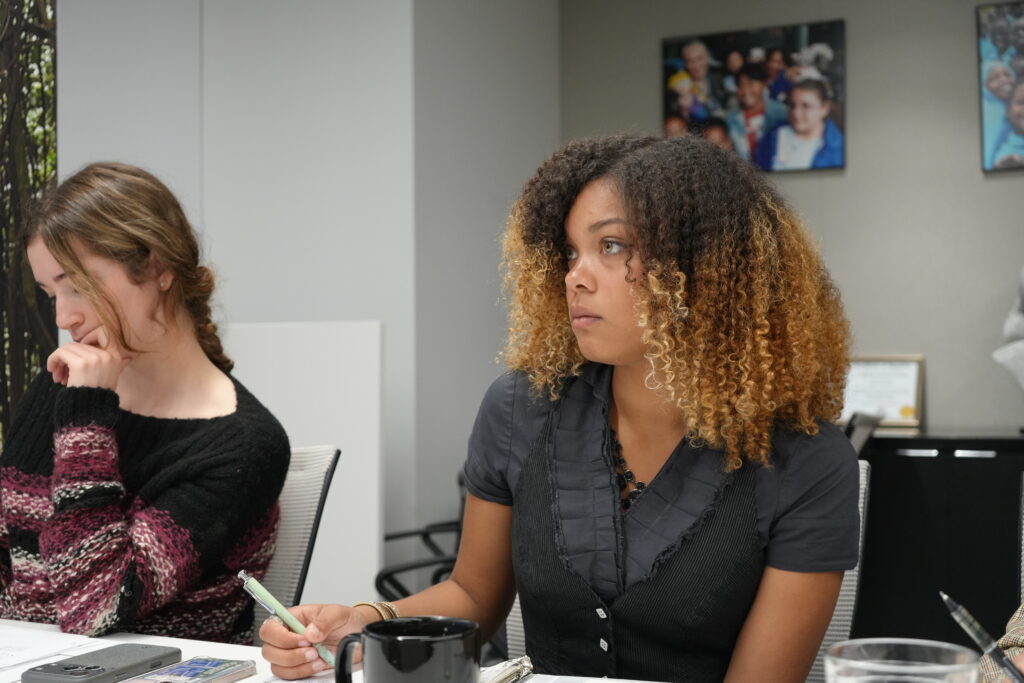
In our interview with Mary Ford, the VP of Roots and Shoots at the Goodall Institute, she talked about how her organization connects youth who wanted to make a difference in their local communities’ environments. She told us about the importance of taking small steps everywhere toward a better world, because it really all adds up. It really made me think: if I can be making these small efforts so easily, I owe it to my future self and future children to make the world they will live in a tiny bit better. She told us, “If you feel like it’s hopeless, take effort anyway.” I think she’s entirely right. It’s always better to make a small step now than to live in a wrecked world later. We have this awareness of the future and of need. We should also feel a duty to help with that need, to rescue that future.
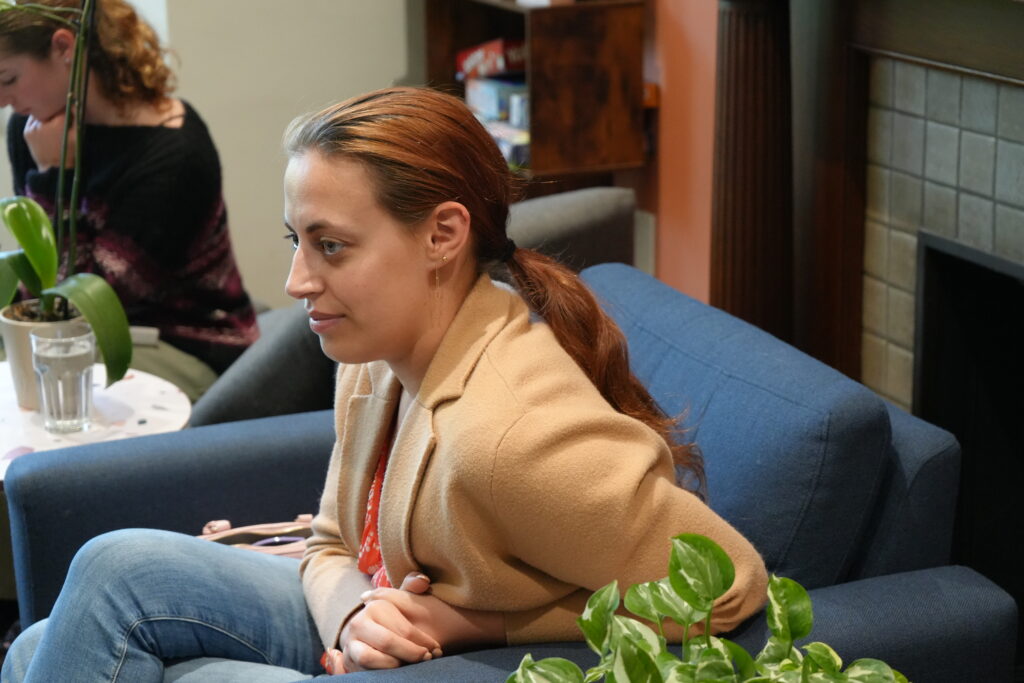
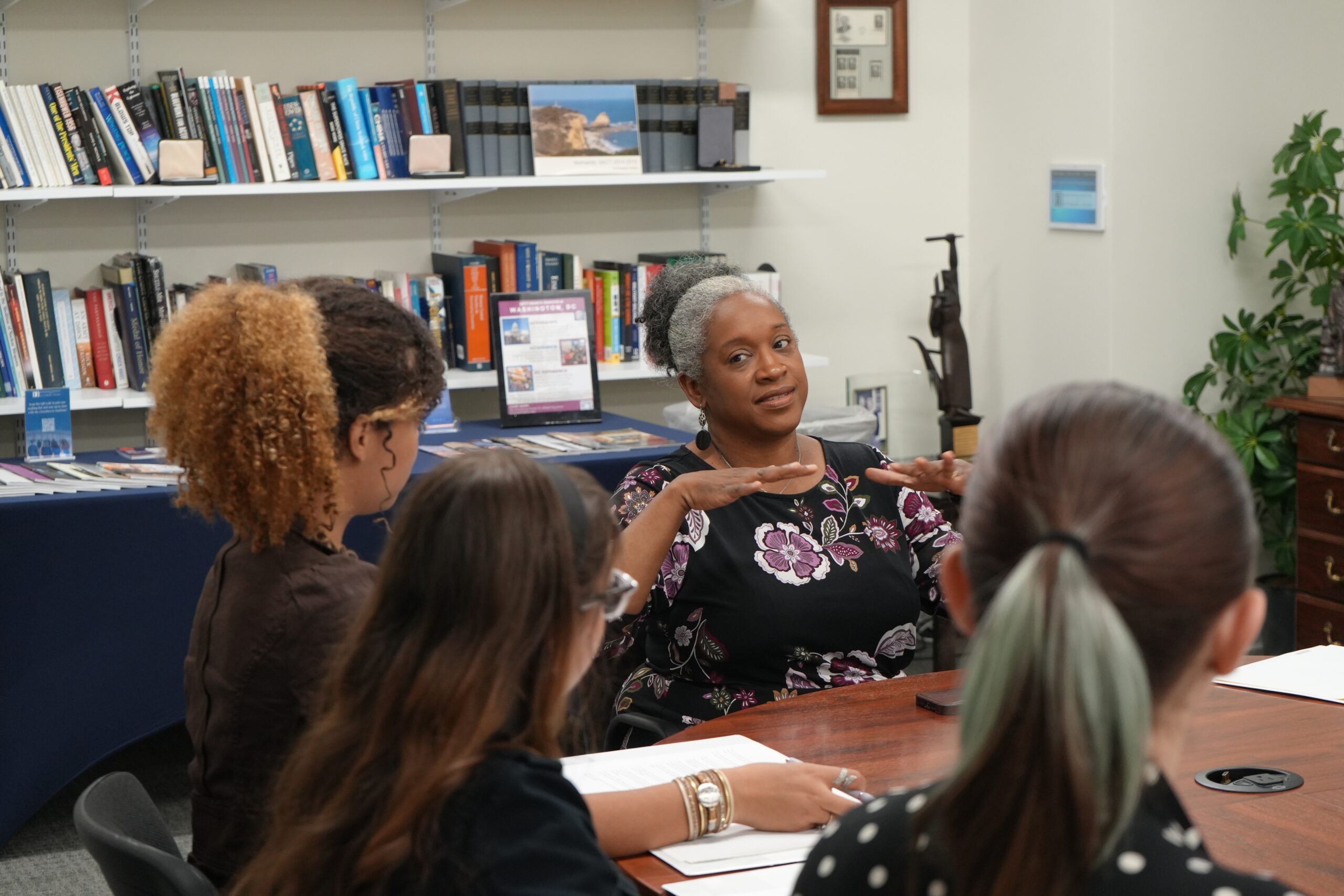
This idea of our duty as Americans also continued in our conversation later today with Eve Levenson, although in a different way. Ms. Levenson is a woman who is younger than the majority of her peers who work in advocacy, campaigns, and political awareness. She worked on the Biden-Harris campaign, encouraging the youth vote. It’s something I found very interesting and inspiring, especially because many people my age are under the impression that their votes don’t count. Voting engagement is fundamental for other obligations to our climate, culture, and safety. As youth, we are the new voices of the world. We are the future, as we are constantly reminded. While things may feel hopeless, we need to remember that our votes are the way we get our voices heard in policy.
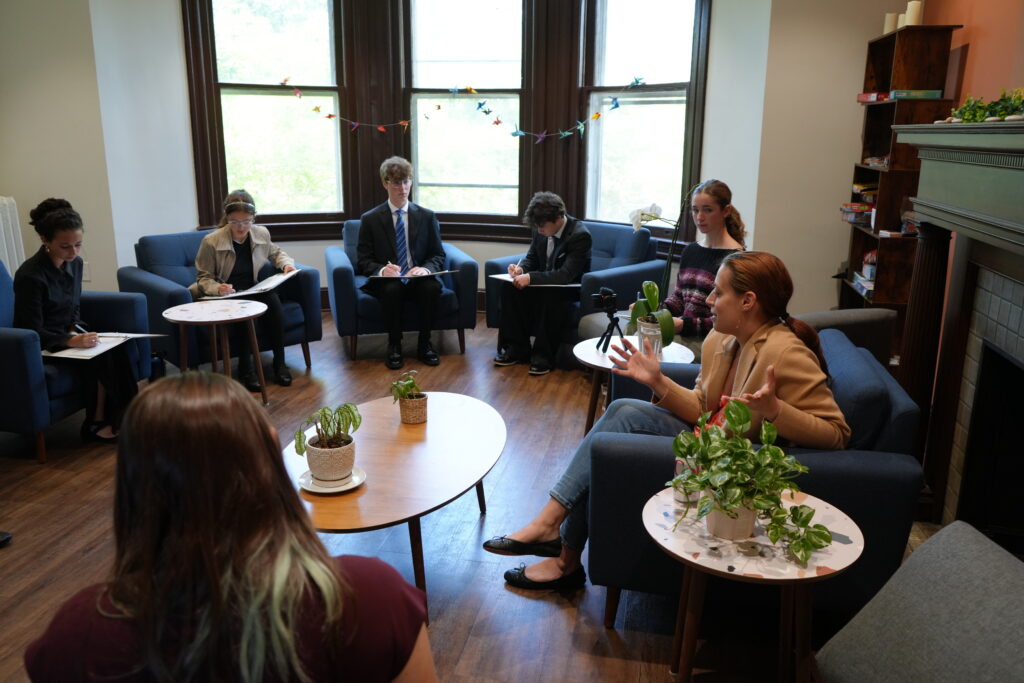
In our final interview, with Alyse Nelson, she shared with us amazing stories of female leaders creating change. She told us of a Slovenian woman who, upon the overturning of Roe v. Wade, returned to the EU with concerns for her rights. She told us how this woman, Nika Kovač, did her research, found out what was within her rights, created a plan, and acted on it. Despite facing dismissal, she used the power of democracy to produce real change, and now there are safeguards across the EU for women in medical need. It’s this duty to one another, the duty to humanity, the taking advantage of democracy, that fills me with hope. She told us, “We cannot accept; we need to fight.” I agree. We have a duty to each other and to ourselves. If we have it within our power to make change where we see it, we must.


There is no future in a world without hope. As Mary Ford said, “Hope is a verb … hope is an action we can take.” We can hope for a better future and then take action. I believe that, as the next generation and as a human being with the knowledge and capacity to see issues in the world, it’s my duty to try to fix them, to stand up for people who don’t have the time, resources, or luxury to be selfless, and to work hard to make the world a safer, cleaner, happier, and more efficient place to live in. Our job is to hope, to serve, and to change.


Victory Gulizia

Young People and Good Leaders Take Risks

We got the opportunity today to interview the wonderful Alyse Nelson. Unfortunately, we only had a brief time to speak with her, but in that short amount of time I felt that I learned everything I would ever need to know to be a good leader, especially a leader of women and a leader for change. Alyse Nelson is the CEO of Vital Voices, an organization that helps women to protest, become leaders, and essentially find their voice.
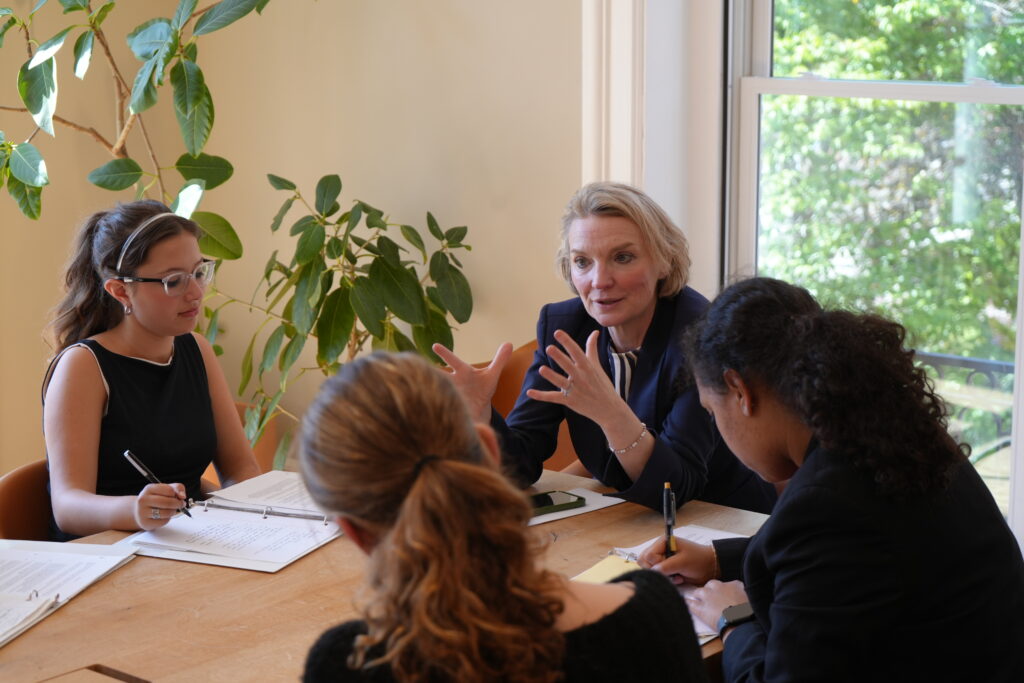
While talking to Ms. Nelson, we asked her about when she first found her voice. She shared with us the story of when she went to Beijing, China, to listen to Hillary Clinton speak. She told us that the one thing she learned was that, “As a young person, you have to take risks.” She took a risk by going to China without the correct documents, and if she didn’t go, she never would have met Hillary Clinton, and she never would have founded Vital Voices.
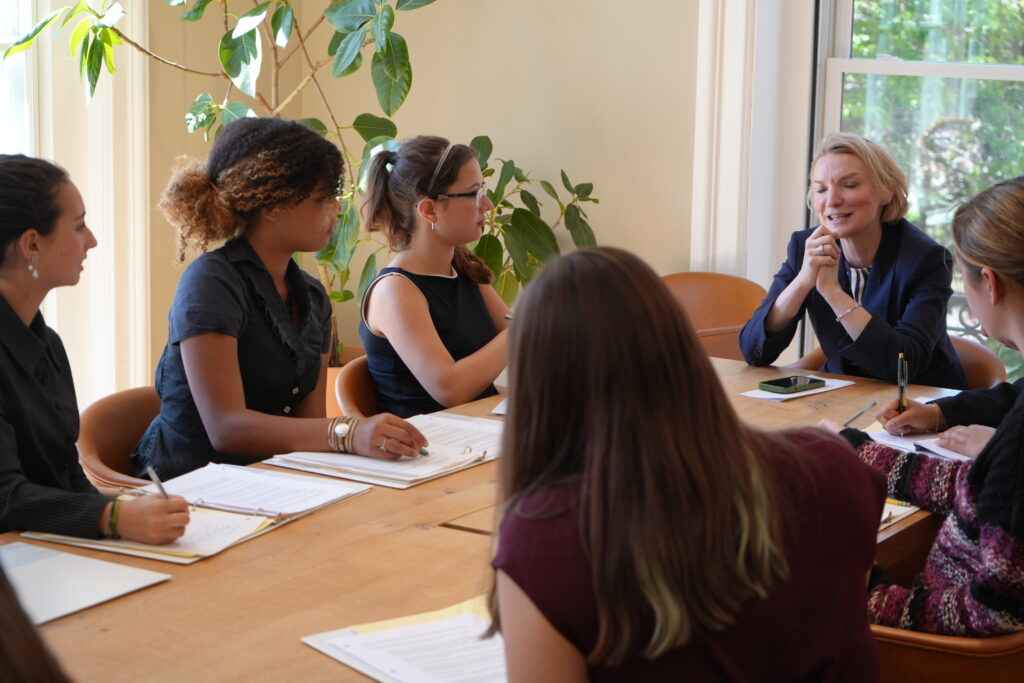
She told us that in her work she has worked with and met many women leaders across the globe, and in her experience she has found that the best leaders take risks. Leaders who make change take risks, and that is what she deemed to be the best quality in a leader, man or woman. In saying this, she also wanted us to know that to be a good leader you have to have your driving force. Everyone who we have spoken to on this trip has told us the same thing, from the military people we spoke to in the Pentagon to the young activist we interviewed today. They all told us to find our driving force, the thing that motivates us to get out of bed in the morning and drives us to the next best thing.

Ms. Nelson also told us to find our driving force. Shen then told us that a good leader has to have drive. f a leader doesn’t have drive, they don’t have a compass. That is what is wrong with politics today. So, if young people take risks and good leaders take risks, doesn’t that mean young people have a head start in becoming good leaders?


Noa Zands

The Impact We Make

As the trip nears its end, it’s interesting to compare the different things that people have said. Today, we had one of the most unique conversations yet. In between our interviews with Mary Ford and Alyse Nelson, we got to talk to Eve Levenson, a political organizer, strategist, and young activist.

One of the core values of her work is Tikkun Olam, a Hebrew term meaning to repair and heal the world. In order to achieve that, she thinks the best way to step into activism is to ask yourself, “What is the biggest impact that I can best make?” Through the course of answering this question for herself, she found her passion. At a young age, she began to take action. I personally found this interesting as a member of MMS student government. It made me wonder what more I can do for my community.
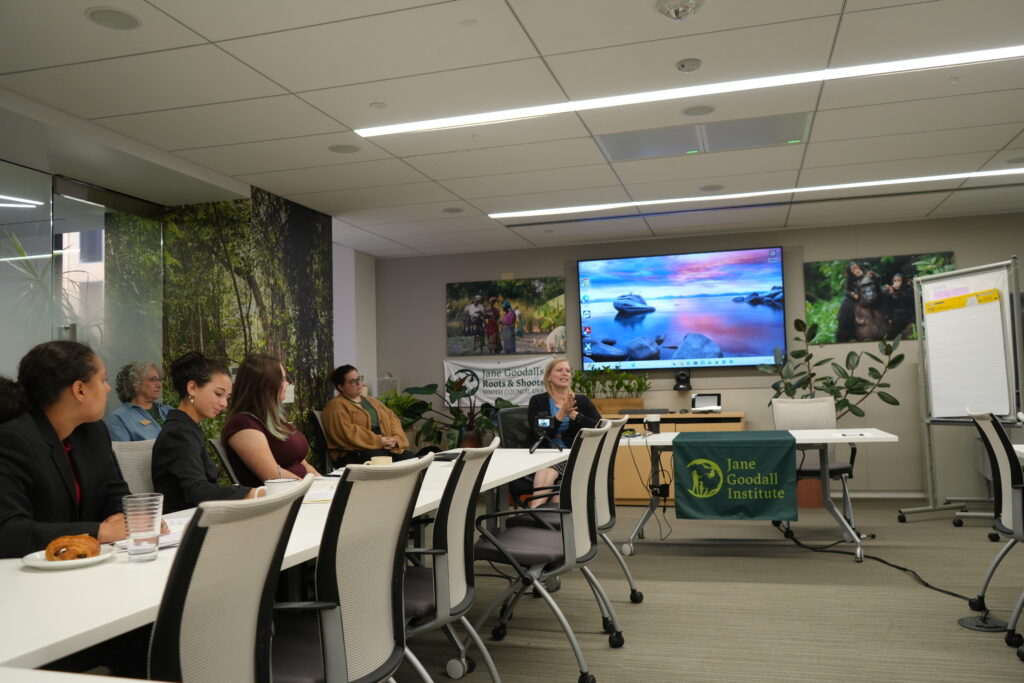
As she gained more leadership roles, she thought more about the impact of identity. Being a political organizer, she brought up the interesting point that a campaign is bigger than the person running for office. The person is just the name at the top of the ballot, but there are thousands working behind that person, which is what she pays attention to the most. However, the more she works at the macro level, the harder she finds it to see the impact of what she does at the micro level. The ratio is no longer one-to-one, as it is when you are making change in a smaller space.
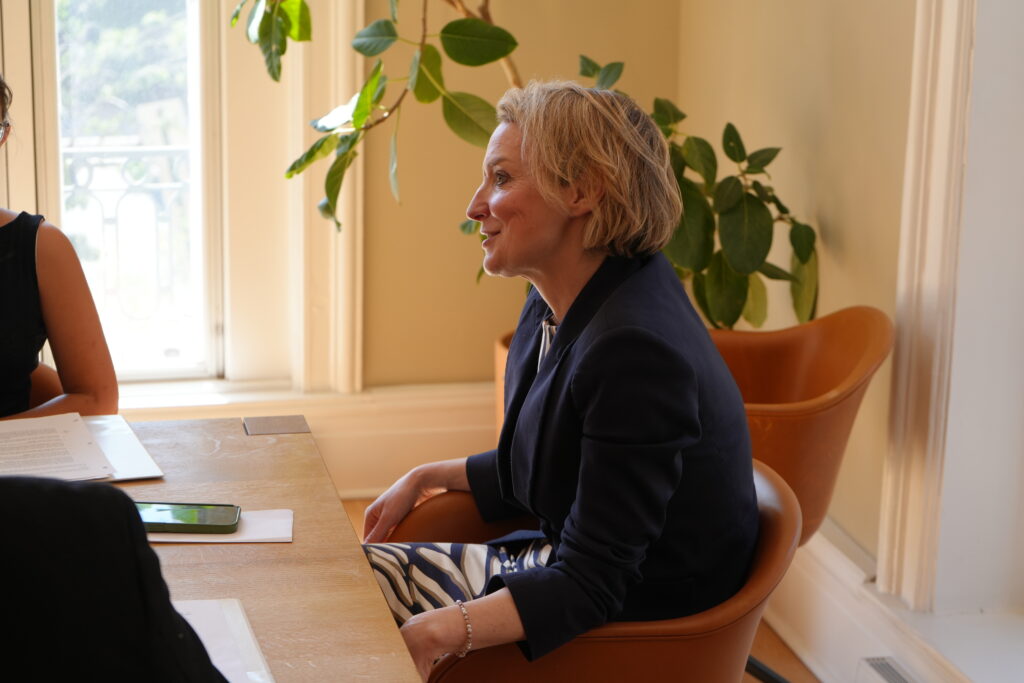
In large political actions especially, she finds that people make promises that are too unrealistic for the level of engagement, and when promises aren’t kept, people lose trust. Of course, there’s always hope, so when we asked her what brings her hope, she said it is the small things: young people being taken more seriously, citizens continuing to make noise, and seeing what people advocate for actually happen.


David Monclus

Hope Is Something You Can Choose to Do

Today we interviewed Mary Ford, vice president of Roots and Shoots, which is part of the Jane Goodall Institute that works with young people to address environmental issues. Our first question to her was about hope. She stated that hope leads us to do spectacular things, but that the challenges in front of us can make us lose sight of that hope.

But her response was a bit of a shock. Mary told us that hope is a verb, not just a noun. In other words, it is a conscious decision to keep on going. To grow that hope, you need to take action to bring in others to make global change. A big part of her goal is to focus on local changes around the world. When every small community improves, the whole world improves.
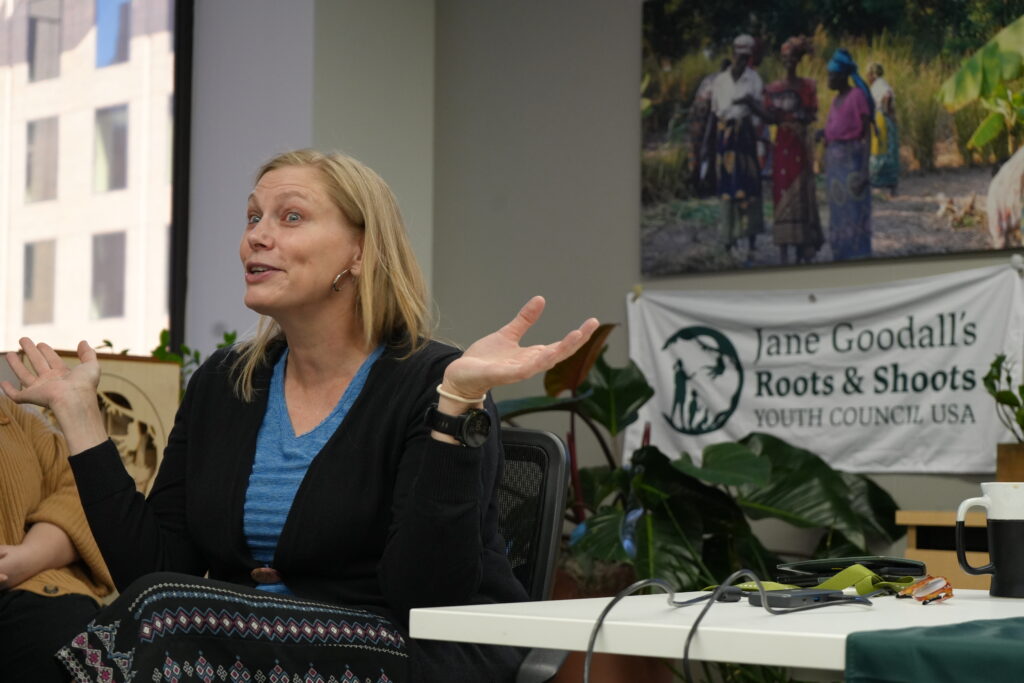
One of their goals is to give opportunities to young people who have obligations that make them unable to participate in Roots and Shoots programs. They have given project grants and stipends to young people so they can better their communities. A big way they help communities is through community mapping, which is a way to recognize a problem with specificity to your community, and to fight for it, and get in “good trouble” by taking action to create change.
Later today we interviewed Alyse Nelson, President and CEO of Vital Voices Global Partnership, which works to support women around the world. She shared a similar idea, saying that we can disagree on 99% of things, but real change happens when there is even just 1% of commonality. When there is healthy discussion, real change is possible.
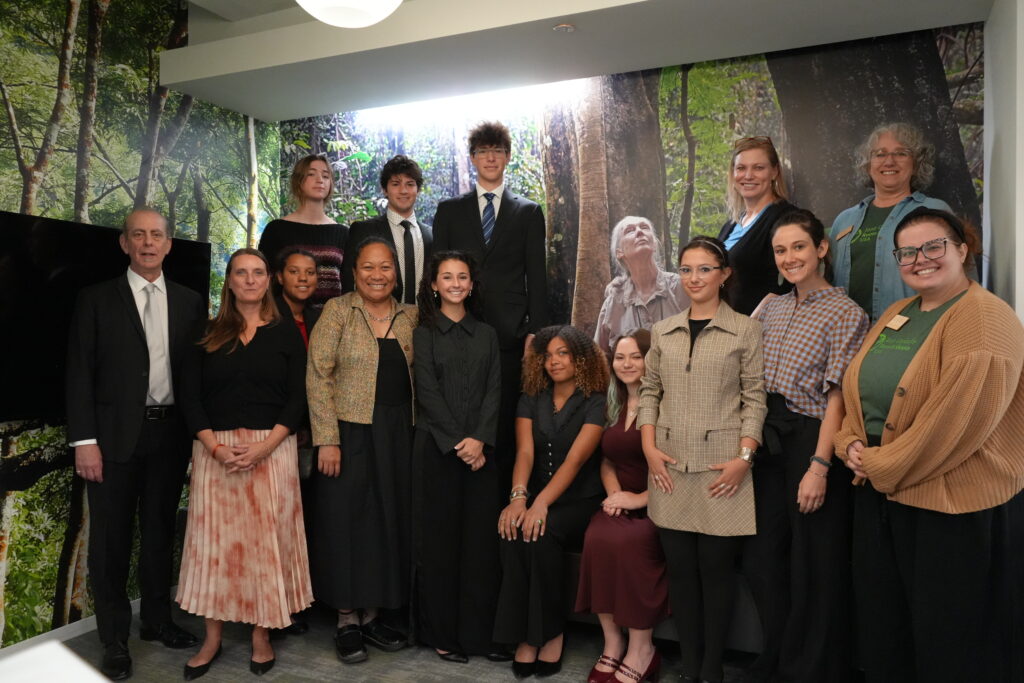
She Does It For Justice

If People Don’t Fight Then We Run Into Trouble

Victory Gulizia

Today we got the opportunity to talk with two very intelligent leaders, Tracie Potts and Susannah Welford. In speaking to these amazing women, who do so much for their communities, I learned many things about myself and the world around me. When we spoke to Tracie Potts, she shared a very deep understanding of herself and the way she lives her life. She lives with purpose and structure. However, within that structure she is open to change and unexpected opportunities. Similarly, Susannah has a very clear understanding of herself and her purpose, going with the flow of life and taking each opportunity given to her. Living according to these core beliefs has allowed these women to go far, and they are truly helping to change the world.

Ms. Potts spoke to us not only as if she were talking to the future of this country but to us as young people in general. She shared with us that after being a reporter for over twelve years, she had just recently changed her career to working at the Eisenhower Institute. She stated that you may think you have it all figured out only to discover that you suddenly want something different, and you may end up loving it even more.

When we spoke to Ms. Welford, she told us the story of how she was always interested in politics, and went to law school, and then worked at a law firm. When the firm ran into financial trouble, she was laid off. However, she explained to us that she now sees that getting laid off gave her the opportunity to run and organize a group with her coworker, which eventually developed into Running Start, her nonprofit organization.

Looking back on both of the interviews with these two women, I feel very inspired by myself and my peers, because even though we are young, and even though we don’t have it all figured out yet, we should meet the future with an open mind and open heart. In opening ourselves to new opportunities and people, we may just find the diamond in the rough—the thing we need to find that we didn’t even know was there. Ms. Potts told us to find our guiding light and to hold it deep within us and let that be the guide through all of our life’s endeavors. Ms. Welford told us to find our confidence and keep it close, and even in times of crisis and discouragement we as young women cannot be discouraged. We must continue to fight for what we believe in because, “If people don’t fight then we run into trouble.”

I got a lot out of both of these interviews, and both of these amazing women inspire me not only to be more interested in politics but to keep an interest in politics in the future. Strong women in all walks of life can be leaders. Why not lead our nation?


Noa Zands

There Is More Agreement Than Disagreement

Today we interviewed Tracie Potts and Susannah Wellford. They were both very inspiring, and there was one thing that really stuck out to me that they both said. Everyone has reasons behind their actions. In order to find this reason you have to assume that they have good will, and be prepared to listen to them to understand where they are coming from. Ms. Potts gave a few words of advice on how better to hear people out: be in control of your emotions, listen to everything everyone says, don’t assume you know everything, learn by talking to people, and give people the benefit of the doubt. This is especially important to people who find themselves angry about what’s happening around them, and frustrated by the people around them. To this point, Ms. Potts advised to find a way to let go of the anger, because she knows people who have carried that indignation. She said, “It’s harder to connect to an angry person.” We need connection in our society, notably in our government, especially given the rise of political violence. Similarly, Ms. Wellford spoke to the rise of fear, specifically in women, when running for office.

The way to get past this anger is discourse. Ms. Potts suggests that if everyone is real about how they feel, then people will find mutual understanding. Similarly, Ms. Wellford said, “When people sit down together, they find common ground.” In order for this to happen though, you have to provide a safe space for civil, non-partisan disclosure.

This concept extends beyond common conversation. Ms. Potts says that right now, Congress is so divided that people think of the other side as evil and think of themselves as engaged in an existential battle. There is a swing between belief systems, and every four years all progress by one side is torn down by the other side. She thinks the way to fix this is to find commonality. Ms. Wellford offers some hope, as she believes, “There is more agreement than disagreement in our country.” So even though we see a lot of violence and anger now, hopefully there is also a conversation, that people are trying to understand why the opposite side thinks that way, and why they act the way they do.


Romy Sirk-Traugh

Violence in Politics 

Today we interviewed a smart woman named Susannah Welford, who advocates for women, regardless of their political party, to run for office. One main theme that stood out to me is how violence in politics is becoming a serious problem.

For women especially, the fear of not being safe can make running for office very stressful. Generally, when people think about politics, they think about the surface level or what’s on TV, like debates, speeches, and elections. Behind the scenes, however, there are often threats, harassment, and sometimes even physical danger. For women, the situation is very intense. Women in politics are often judged more harshly than men, and they are more likely to be targeted with personal attacks. Instead of focusing on what their actual beliefs are, critics may focus on their appearance or personal lives. Nearly 45% of female elected officials have faced threats of death, rape, or abduction, and over 65% have been subjected to humiliating sexual or sexist remarks. This kind of disgusting behavior leads to a lack of women running for office.

Despite these challenges, some brave women, with the help of Susannah Welford’s support, continue to run for office. Their courage shows how important it is to have diverse voices in politics. When women are involved, they bring new ideas and perspectives that can help create better and fairer policies for everyone. Susannah Welford’s interview gave me hope, especially for my generation, because she inspires bravery in young women, including myself, who have always been fearful of being a public female figure of any kind.


Gianna Clayton-Holmdahl

From Passion to Action

Today, we interviewed Susannah Wellford. She made a lot of good points, including that growth can come from setbacks, and the importance of local and grassroots change. One point that really stood out to me was how she talked about passion turning into action. This really piqued my interest because it made me think that passion alone isn’t enough. You also need community, courage, and action. When I think about it, change does not come from one person or from money alone, but from a passionate community acting together. She said: “There were all these organizations that were the ‘next big thing,’ and I would be sort of jealous. And then the next big thing dies, but Running Start is still here.” This quotation shows how her passion for Running Start has pushed her through the hardest of times. It shows me how, if I start really caring about things, I can help make change.

Another thing she talked about is that small actions can lead to a big impact. Something she said that really made me think and set it in stone is, “Maybe you’re not going to change the enormous things, but maybe you’re going to make something in your community better.” I feel like this is super important for me because it makes me realize that even if I do something small in my community, there’s a bigger impact than I thought, which makes me feel better and more willing to do more small things for my community.

Her message showed me that lasting change isn’t about being the “next big thing,” but about consistently taking action and making a difference where you can. Even if those actions seem small or insignificant at first, they still truly matter.


Find Your Guiding Light

David Monclus

If Something Is Worth Doing, It’s Worth Doing Well

Today we interviewed Tracie Potts, Executive Director of the Eisenhower Institute at Gettysburg College. Our conversation was very touching. I believe that each and every one of us got something out of it.

Multiple things she said hit me emotionally and made me think about the decisions I am going to make for my future. My dad always tells me that no matter what you do, as long as you put in the effort you will get where you want to be eventually. Ms. Potts had something similar to say: “If something is worth doing, it’s worth doing well.” All my life I’ve heard this idea, but I’ve never felt I have fully committed myself to it. Discipline isn’t something that I can just develop overnight, but is something I need to strive for to achieve what I want. I want to apply this idea to my personal life, not just to achieve what I want but also to have good relationships with the people I really care for. It also got me thinking about what drives me right now, what I value that might be leading me in the wrong direction. Have I really been putting in all my effort into the things I think are worth doing because I consider them valuable? Another thing she said got my attention: “Always keep the personal in the forefront along with your career when making decisions.”Since I don’t have a professional career yet, I have to apply this idea to the decisions that will affect my future. I’ve always had a strong sense of family. I love my family very much, and in the future I want to keep them close no matter what my career is. I understand that, as Ms. Potts said, “You can have it all, but there are trade offs.” With new values and a better understanding of myself I believe I will be able to achieve my goals and live a life that I value and truly want to live.

It’s amazing that I realized all of this before 1:00 PM today: when you really listen to someone who opens up and responds with meaning, you learn more about yourself. A world has opened up that I have never explored. Now I want to explore it.


Victory Gulizia

Finding Your Guiding Light

Today we had the opportunity to interview Tracie Potts, Executive Director of the Eisenhower Institute. Throughout the interview we asked many questions about different topics, ranging from AI and its use in reporting and politics to Ms. Potts’ personal relationship with her faith.

As she spoke, she said so many inspiring things I was overwhelmed with topics I wanted to discuss. However, something that stuck with me the most was when she said, “Find something that you strongly believe in and follow that.” This statement really resonates with me because I know what I want to do in life, but what drives me to do it is always a question. She expanded on this statement and said that when you have something that drives you and guides you it can carry you through your whole life, even when life includes getting accepted or not accepted to college, getting and leaving jobs, and having kids, husbands, friends. Your surroundings are always changing, and the environments you’re in are always evolving. Through the good and the bad your guiding light will always be there not only to drive you but to ground you when times are hard.

Hearing these statements from a very wise woman who has so many views that are so nice to hear, made me feel not only inspired, but they caused me to think. I realize that I need to find my guiding light, which I am going to need to help me decide my next step all through my life. After thanking her for her time and heading back to the hostel, I began thinking about my future, and I realized that the career that I want to pursue is nursing, because at the core of that occupation is caring for others. Selfless service has been a recurring theme of our trip, and after meeting and talking to people this week I have decided, at least for now, that my “thing,” as Ms. Potts called it, is caring for others, which is a form of selfless service. I am so grateful for having the opportunity to talk to Ms. Potts and for being inspired by such wonderful and intelligent women, and I was happy to thank her for her time and wisdom.


Cameron King

Hope for the Future

Today we talked with Tracie Potts of the Eisenhower Institute, who told us multiple times how much hope she has in our generation for the future. She started off by talking about how much of the future is riding on us and how much pressure has been put on us by past generations in the hopes that someone will eventually pick up the ball. Well, the time has come for us to pick up the ball. 

Throughout our lives we have seen the world become polarized, often by the media. She stated that since we’ve seen this conflict our whole lives it is natural that we become discouraged and lose hope, and in many cases we have. I often find it difficult to look forward and imagine a future in my lifetime that is significantly different from what we are currently facing in terms of equity, climate, and inclusion. 

Several people we have interviewed this week have told us how much hope they have in the future after speaking with us and hearing our concerns. Ms. Potts was no exception, as she repeatedly told us how proud she was of the questions we asked and the topics we raised, which renewed her faith in our generation. I found her response interesting, because most of what I hear from adults is that they think my generation has no work ethic and that we don’t have interests other than our social lives. Perhaps this stigma is applied to teenagers at all times. I have been laughed at before for expressing what I want to do in the future and told “good luck” with an uninspiring smirk. These comments only strengthen my idea that older generations have no faith in us, yet I have heard the complete opposite from adults here in D.C., giving me enough hope to keep trying.

She did recognize the unfair amount of pressure that has been put onto us from older generations, since some people go too far the other way and have too much faith in us and believe we can magically fix everything on our own, which isn’t the case. Ms. Potts said that the best way to create meaningful and lasting change is for us to work together with past generations and gain as much knowledge as possible to learn where the mistakes have come from so we do not make them again. 

It’s hard to know where to start to make impactful change, but she reassured us that the most important thing we can do is take pride in our work and do it to the best of our ability: “If something is worth doing, it’s worth doing it well.” Whatever we choose to do with our lives, I think the most important aspect is to find something we are passionate about, and to be able to define what meaning means in our lives, whether it be making famous speeches after receiving awards or inspiring one person and giving them the same hope that she has given us today.


Gianna Clayton-Holmdahl

You Keep Pushing Anyway

Today, we interviewed Tracie Potts, Executive Director of the Eisenhower Institute. She touched on many things, but the most impactful message she shared was about growth over convenience. I believe growth over convenience is when you pick something hard or not the best or easiest choice, even if it feels uncomfortable in the moment, so you can grow instead of staying stagnant. It’s about focusing on long-term success rather than short-term comfort.

Having real support is not giving people the easiest option. It is about helping them find opportunities that actually help them grow. She explained that true support challenges people instead of lowering expectations for them. She gave multiple examples of this. She had a student who had backup opportunities, but those opportunities did not align with her goals and would not develop her long-term skills. So instead of encouraging the easier option, she pushed the student to pursue something more meaningful for her future. Another example is that she had a student who was having a hard time getting an internship, but instead of seeing it as a failure, she saw it as progress. She said this super-inspirational quote during the interview: “Sometimes the growth path isn’t straightforward, but you keep pushing anyway.” This quote inspired me because it made me realize that growth isn’t about following one set path. There isn’t only one “right” way to succeed. You can take different routes, face setbacks, and still end up somewhere meaningful. It changed how I think about failure and opportunity and made me realize that pushing through challenges is what truly helps people reach their goals.

Overall, this interview made me realize that growth often requires discomfort, but those difficult choices are what lead to real opportunity and success, and that pushing through challenges is what truly helps people reach their goals.


Mariska Goldstein

Holding on to Hope

This junior class trip to Washington DC has meant so much to me. As I reflect on the trip and what I have got out of it, I think most about my future and finding my passion. On my last day here, my class and I had the great privilege of interviewing Tracie Potts of the Eisenhower Institute at Gettysburg College. Ms. Potts is filled with more passion to share, teach, and inspire, than I could have ever imagined. She emphasizes not just taking a job because it’s a good one, but rather finding something that will keep you wanting to come back to it. She told us to “hold on to hope,” and she kept returning to the theme of us going into the next phases of our lives, picking career paths, and finding our passions. “Keep your happiness and what matters to you at the forefront.”

As someone who has a lot of passion but isn’t quite sure what to do with it yet, I really have a lot to think about. Maybe one day I won’t be paid well, or maybe I’ll have to move far away, but in any case at least I’ll be doing something I love. As she said, “If something is worth doing, it’s worth doing well.” Why waste your time doing something with minimal effort, when you can be the best at it?

Interviewing Ms. Potts was an amazing way to finish this trip for me. As I sit in the airport, waiting to board my flight, I couldn’t be happier. I will forever cherish every moment of this trip and never forget this journey I was so fortunate to take. I will now put more emphasis in my life on holding on to hope while following my passions and dreams.


The Humans Behind the Pentagon

Romy Sirk-Traugh

Shedding Your Skin

Today we went to the Pentagon, the most important building for the United States military. While we were there we interviewed a member of the US Army, Major Russell, and he shared some really moving thoughts about his experience in boot camp and adapting to the army lifestyle. Before the interview even started, something that stood out to me was a dog named Charlie. Charlie is known for being friendly and helping raise morale. People working in really serious and high-pressure places can really benefit from something like a dog, especially one as sweet as Charlie. It showed me that even in an intense environment, small things can make a really big difference.

I was also really impressed by “The Tank,” a room where the Joint Chiefs of Staff meet to discuss top secret military objectives. It was one of the coolest places I’ve ever been. During the interview, I asked Major Russell what the biggest change or adaptation he faced when he joined the Army. His answer was very powerful. He said that joining the Army felt like “shedding his skin.” He said the boot camp is designed to break a person down and rebuild them into a stronger version of themselves. It is not just about physical strength but also mental toughness. What I found most interesting is how Major Russell didn’t talk about this change in a negative way, but instead is very proud of it. Overall, the experience in the Pentagon was really eye opening. From meeting Charlie the dog who helps people stay positive, to hearing Major Russell’s story about transformation in the Army, I learned a lot. It also gave me a new respect for people in the military and the sacrifices they make to serve the country. 


David Monclus

The Human Side of Power

It is our fourth day in D.C., and thanks to Shannon’s connections, we were able to get a tour of the Pentagon. Our tour guide, Officer Anthony Jackson, is a very nice man who has been serving for over twenty years in both the Army and Pentagon law enforcement. We started by checking in through security, where we met Charlie, who might have the coolest job ever. Charlie is a dog, and his purpose is to give people a boost of morale or a break from their jobs. It was a small moment, but it said a lot about the working environment, that even in such a serious place people recognize the importance of mental breaks.

Officer Jackson then took us to meet Colonel Siverts and Major Russell. Colonel Siverts brought us to the Joint Chiefs of Staff meeting room, also known as “The Tank.” This is the room you see in movies where major crises are discussed and decisions are made. Realizing that we were standing in the actual space where those conversations happen made these decisions feel so much more “real.” Thanks to Officer Jackson, we were able to step into a place that most people only ever seen on a screen. Once in The Tank, we interviewed Colonel Siverts and Major Russell, who work for the Joint Chiefs of Staff. We spent about an hour-and-a-half asking questions on the fly and listening to them talk about their experiences and perspectives. Their responses didn’t feel scripted, but felt like a genuine conversation in which we were learning from them. Similar to our interview yesterday with Congressman Jimmy Panetta, they both emphasized how important selfless service has become in their lives. They didn’t necessarily join the Army or Marines for that reason, but over time the values they developed and the sense of being part of something bigger than themselves became what kept them there.

That idea of growth really stood out to me. They have both completed several tours in Afghanistan, and you could feel that when speaking with them. There was a sense of gravity in the way they carried themselves and spoke. It wasn’t something they said directly, but you could tell they’ve experienced things far beyond what most of us understand. At the same time, they weren’t distant. They were poised and formal when needed, but they also knew how to relax and connect with us, which made the conversation feel more human.

The Pentagon itself is incredibly impressive. Officer Jackson mentioned that there are roughly 20,000 to 30,000 people working in the building, and it truly feels like a small city. The tour lasted from 8:30 to about 2:40 in the afternoon, and just walking through the building felt like moving through a self-contained world. There are food courts, a gym, basketball courts—pretty much everything you would need in one place. Getting the chance to play a little one-on-one basketball on the court was a very memorable part of the experience. Overall, being there and meeting the people we met gave me a better understanding of who is actually behind the decisions we hear about. Those roles now feel less distant and more human. Seeing the people who hold that level of responsibility and understanding and how they think and what they value changed the way I look at power and what it really means.


Gianna Clayton-Holmdahl

Inspired to Join the Space Force?

Today, we went to The Pentagon and interviewed Officer Jackson, Colonel Siverts, and Major Russell. It was really interesting to hear about their personal journeys, what originally drew them to the military, the challenges they’ve faced, and the impact they feel they’ve made through their service. Each of them shared that their decision to join often started with something practical, like educational opportunities, but what kept them going was a deeper commitment to selfless service and being part of something bigger than themselves.

Before this experience, I already felt like I might want to join the military, but I wasn’t completely sure. Talking to people who have actually lived that life and built long-term careers in it gave me a clearer perspective and a bit more confidence in that interest. Hearing their stories made the idea feel more real and attainable, rather than just something I was considering from a distance.

We also learned more about the United States Space Force, which stood out to me the most. As a new branch that is separated from the United States Air Force, it focuses on protecting satellites, advancing space technology, and maintaining U.S. operations in space. What really interests me is the technology side, developing new systems, working with cutting-edge innovations, and exploring how space plays such a big role in everyday life and national security. The idea of combining service with advancements in technology and space exploration is something I find exciting and worth seriously considering for my future.


Delmi McWilliams

What Is Selfless Service?

Today we visited the Pentagon, which was a truly amazing and one-of-a-kind experience. We got the opportunity to speak with Colonel Silverts and Major Russell, along with Mount Madonna’s beloved Officer Jackson. Speaking with them was fascinating. It allowed me to consider a perspective I never had before, and compare it to my own life.

To be in the military is a dedication for years of effort and commitment. It’s not easy, and it’s not for everyone. I think I lack the discipline for it. To truly be committed to the military in the way that is necessary to be most beneficial to it, you need to deeply value selfless service. Both the Colonel and Major spoke on what selfless service means to them, and it was deeply inspiring. For them, serving their country is a truly honorable thing to do, and therefore their career is an honorable one as well. Their concept of selfless service is what drives them to stay in service for the military, and to excel within it.

But what is selfless service? At Mount Madonna, it’s a value we all hold. We value community service, and giving back to those who don’t have the privileges we have. In our community, civil service takes the form of food drives, planting community gardens, distribution of clothes and medicine and beach cleanups. It means seeing places we can help, and doing what we can. But in the context of the military, civil service can mean something different.

It’s very interesting to think about the different contexts that service can have. During our interview, I found myself comparing them. Service is a duty to other people, but what can that mean? For some, selfless service means making a sacrifice, performing active duty, and enduring grueling training and work. For us, it means something different. Selfless service means different things for different people, and different sacrifices people are willing to make for what they think is right.


Solomon Coleman

A Rare Visit to “The Tank”

Today was for me the most anticipated day of the trip. Before going on the Washington D.C. trip we were to write a pre-trip reflection for an assignment in our Values class. I honed in very early on the fact that getting to see the behind the scenes of the military epicenter of the United States was an experience to be cherished.

We woke up even earlier in the morning today, at about six, in order to meet up with our kind friend and guide Officer Jackson. Although getting myself motivated at the beginning of the day was difficult, once we were in the Pentagon it was hard to be disinterested. We met the Pentagon’s dog, Charlie, and took a picture with him, foreshadowing the fun and comfortable day of learning we had ahead of us. We then moved deeper into the Pentagon, past the Visitor Center, where Officer Jackson described the layout of the building. The Pentagon is essentially a small city. Inside there is a huge food court, with numerous chain restaurants that we all know and love, a Virginia DMV, two banks, a pharmacy, clothing stores, and most of everything else you would ever need.

Later, we had the opportunity to speak with Colonel Siverts from the Marine Corps and Major Russell from the U.S. Army. After introducing ourselves, we were led into “The Tank,” a conference room restricted to the Joint Chiefs of Staff. Regular tourists are not allowed to view the room. As Officer Jackson emphasized the significance of our visit to The Tank, my jaw dropped. Today truly opened my eyes to the great fortune that I have in my life, the amazing people working to protect us every day, and their profound commitment to public service.


Victory Gulizia

Renewed Faith In My Country

Today we had the opportunity to tour the Pentagon with Officer Jackson. Officer Jackson works in the Pentagon Force Protection Agency/Pentagon Police. We visited some very important sections of the Pentagon, and we spoke with Colonel Thomas M. Siverts, who serves in the Marine Corps, and Major Russell, US Army. During our conversation with these men we asked many questions, which they answered thoughtfully and honestly. One of the common themes from our conversations in our Values and World Though class is the attitudes and core values of politicians, and how they have changed over time. My favorite example is George Washington and how as the first president of our country he set the example for all of the presidents who have followed him. George Washington was a humble and patriotic man who lived to serve his country. I asked Colonel Siverts and Major Russell, “In the past, many politicians had a background of serving in the military before entering politics; knowing this, would you ever consider going into politics after your time serving.” Both Colonel Siverts and Major Russell gave an enthusiastic “no!” Their answers to our questions were honest, sincere, and rooted in their commitment to public service and the core values of this country. Their repeated expression of their dedication to the Constitution made me feel as though these men have the core values that this country was founded on and should be governed by. Politics have changed since George Washington’s time. Politics in more recent days looks more like trying to run a business instead of maintaining a democracy. I think that the core values of selfless service and serving the Constitution have been lost. I hope that in the future, politics is dominated by a commitment to the core values of selfless service and devotion to the Constitution that Colonel Siverts and Major Russell demonstrated today during our interview. I want to thank these men for their time and their service to our country, for the inspiration they have given me, and for my renewed faith in my country. 

Congressman Panetta: Progress Takes Partnership

Noa Zands

Congress and the Workings of the US Government

A key part of the DC trip is to understand how our government works. What better way is there to do this than to interview elected officials? Today we talked to Congressman Panetta, who represents California’s 19th District. Even though he is a Democrat, he is known to be one of the most bipartisan members of Congress. I think I now have a better grasp of what it means to pass legislation, especially in the time we are living in now. In order to make change happen, Congressman Panetta chooses to push for progress instead of his personal opinion, leaving heated emotions out of the debate. He said, “When you use your emotions to win an argument, you may win short term, but you lose in the long run.” When representatives leave emotions out of debate, Congress stops going around in circles and legislation keeps moving and progressing, another one of his core values.

However, while this is a good concept in theory, it seems to fail in practice because of how many of his colleagues are committed to their personal beliefs. He said that being in government is more than just yelling and screaming. An example of when we can see his principles in practice is his work on behalf of veterans, which he claims is one of the most bipartisan issues in Congress. One question we asked was, “How can we help veterans as civilians?” His answer was to not wait on the government, to take the initial step, and to advocate for what we want to happen. He said that change will happen, and “it doesn’t matter if it’s done slowly; it just matters that it does get done.” All in all, it was a very insightful experience to learn about the actual inner workings of the US government, and how being bipartisan can help create change, even if it comes gradually.


Victory Gulizia 

Government Requires More Than Elected Officials

At the start of our trip to DC, we were told to expect the unexpected and be aware of our surroundings. I therefore knew from the beginning that I wanted to recognize and acknowledge the differences between the elected officials and unelected officials that we were interacting with and interviewing.

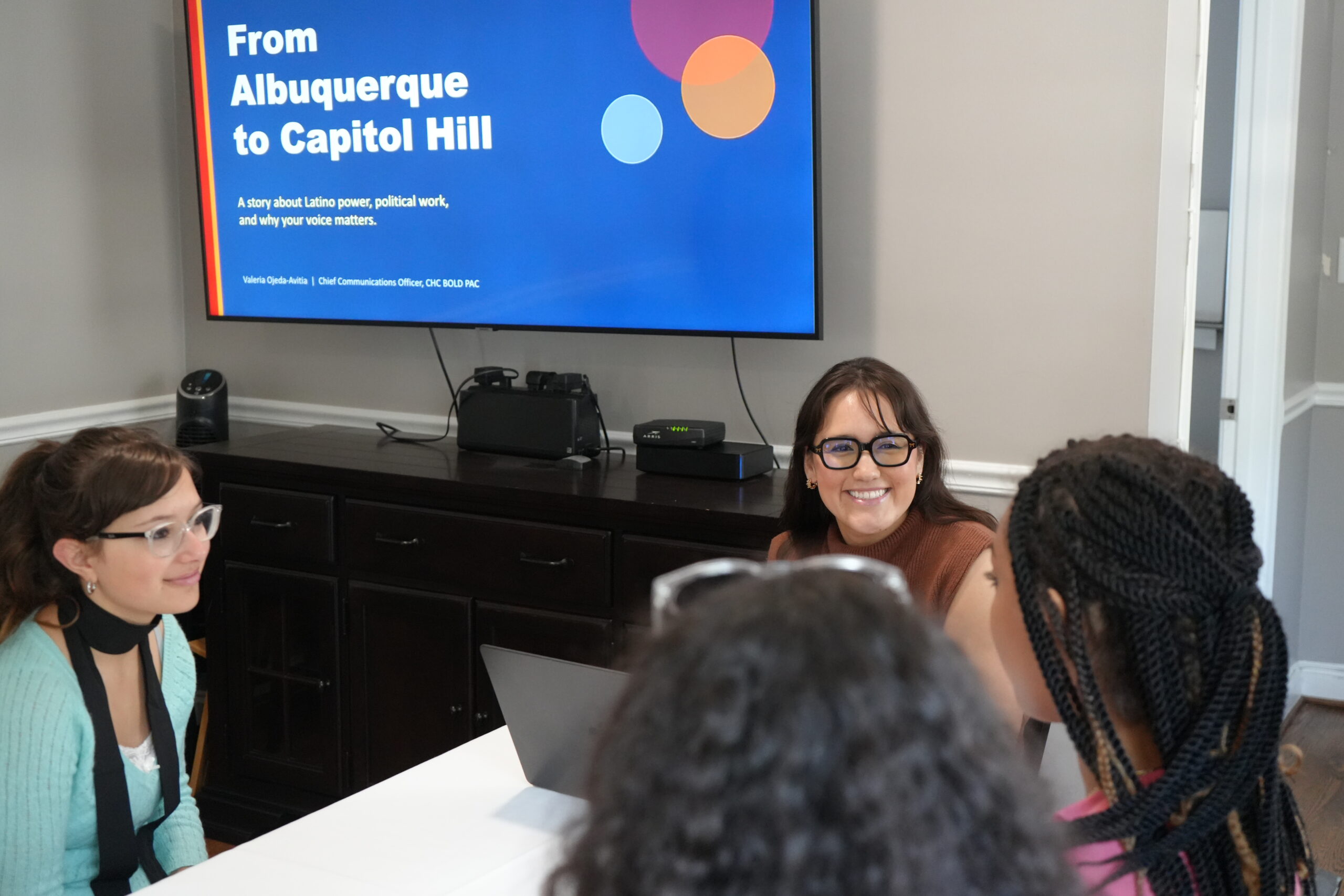
Yesterday we had an unexpected visit with Chelsea’s friend from her middle school, Valeria Ojeda. She works for the Hispanic caucus in Congress and for the political action committee CHC BOLD. The interview felt more informal because we didn’t have prepared questions. However, in speaking with her I learned so much about things I had never heard of before. Valeria spoke with a formal and educated tone, but she also spoke honestly about the purpose of her work, as well as what and who she likes and doesn’t like. I appreciated her sincerity and enjoyed the genuine responses to our questions. I learned a lot about the Hispanic caucus and realized that there are people working with and alongside our government, trying their hardest to create more diverse representation in our current government.

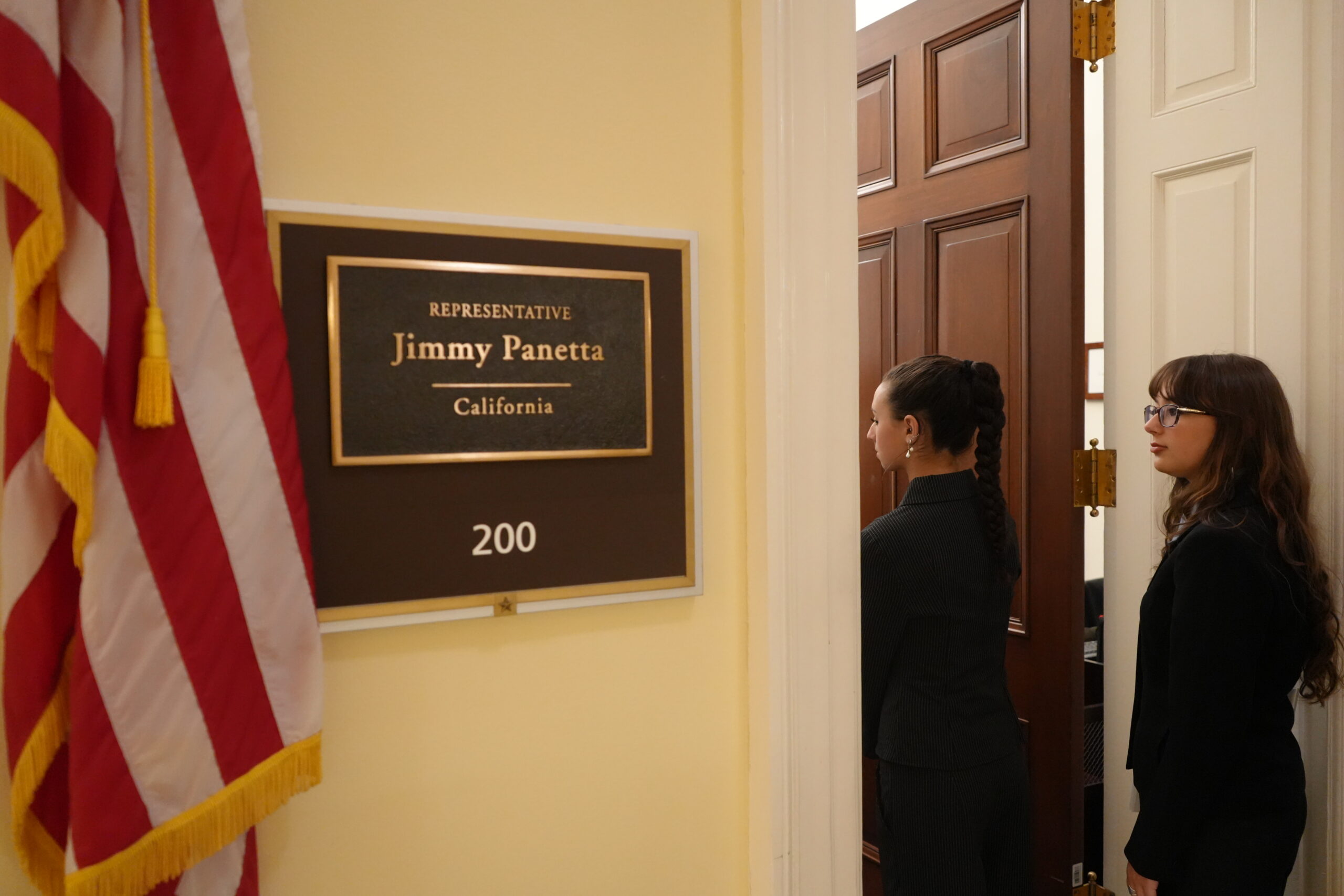
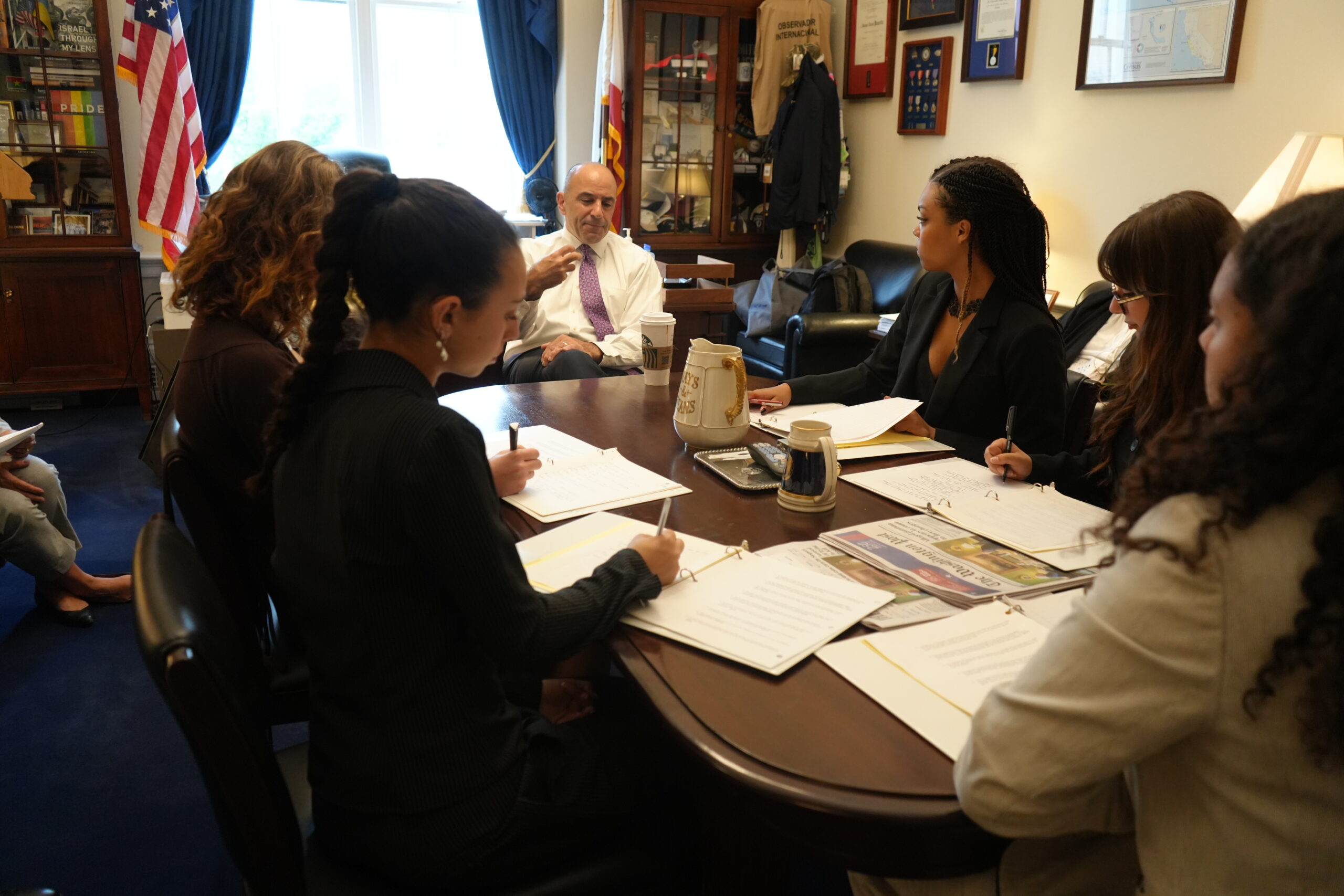
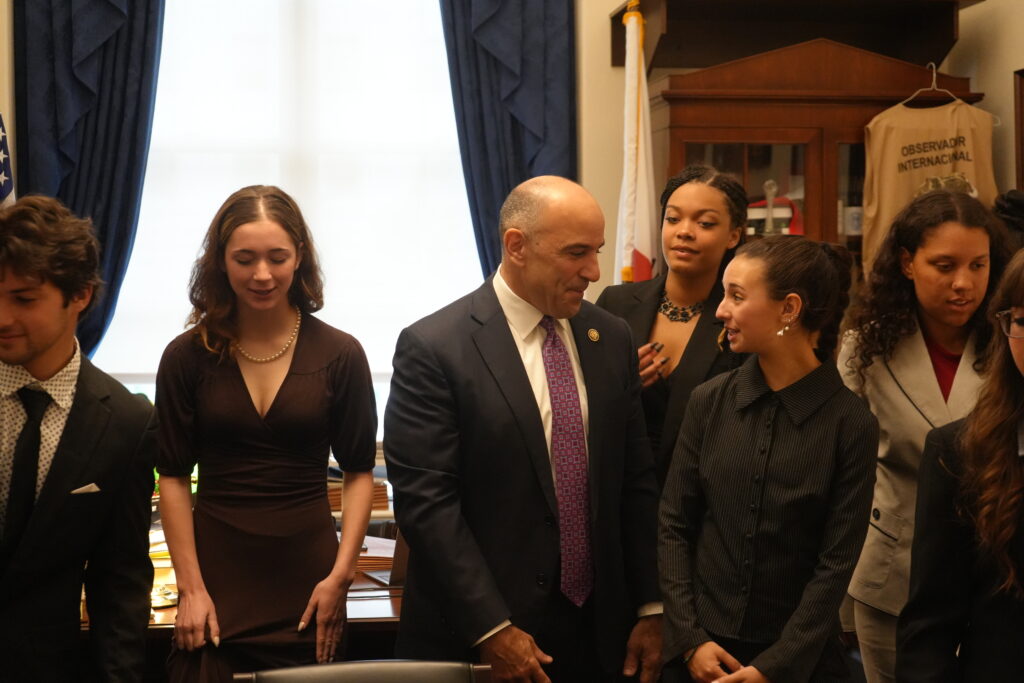
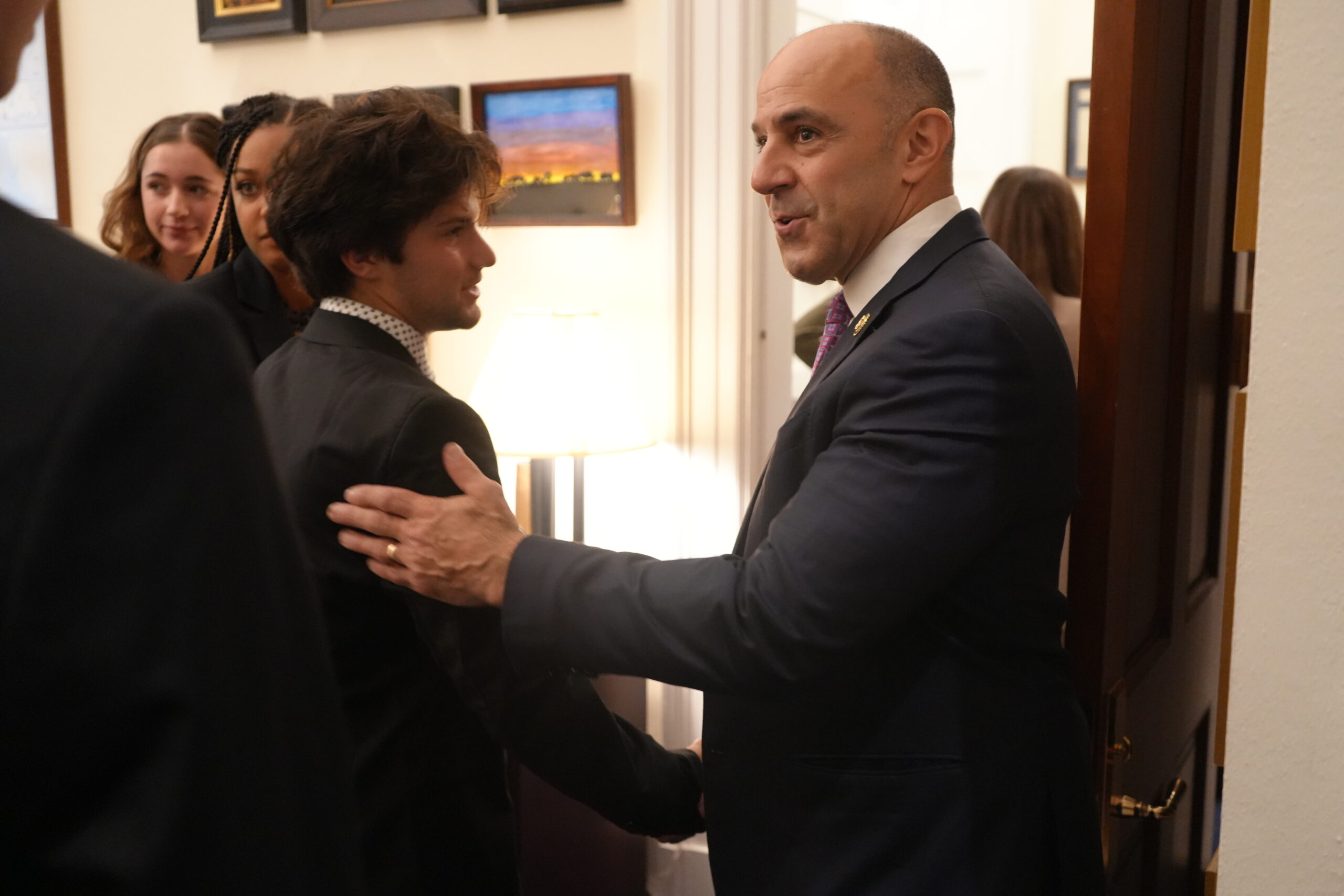
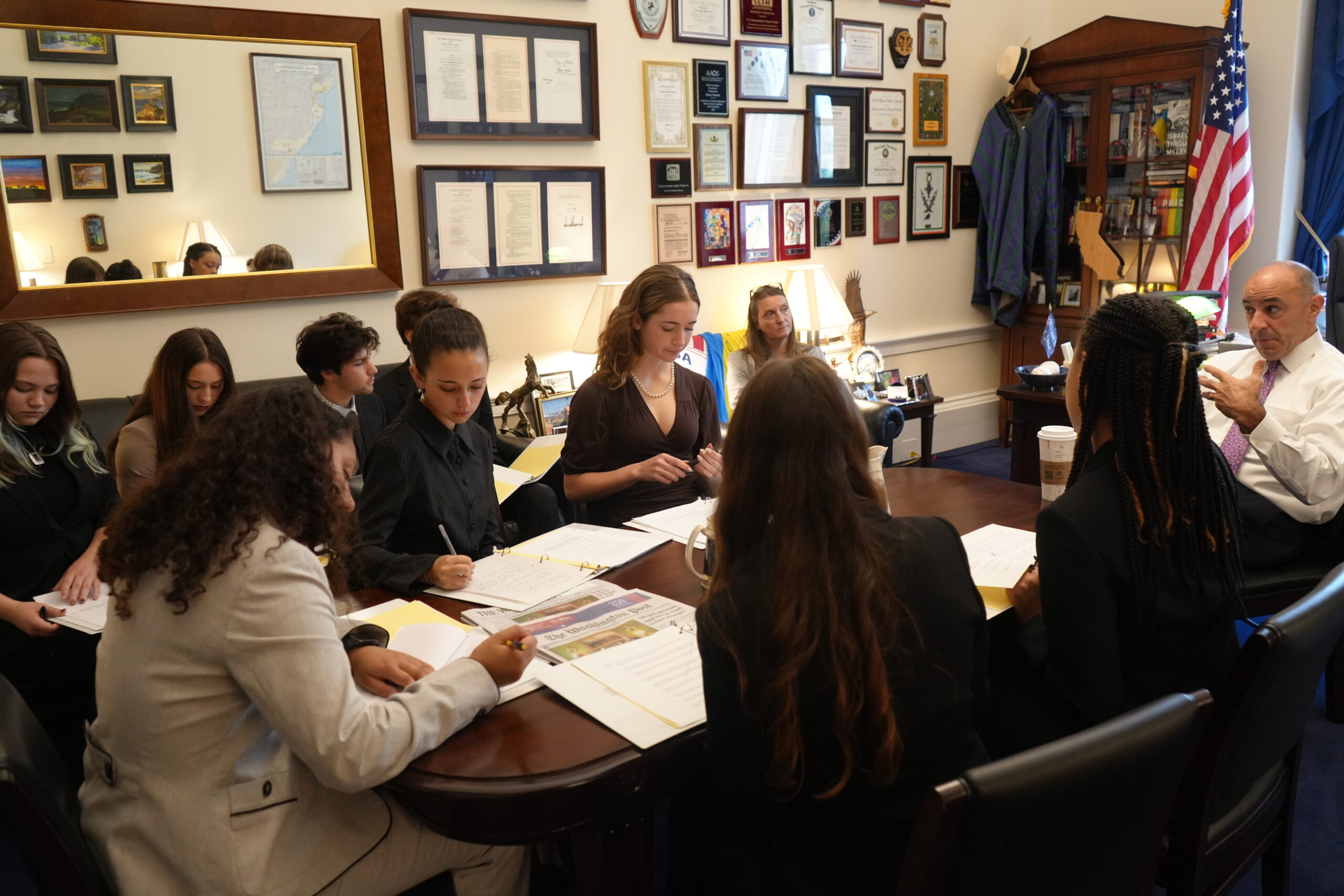
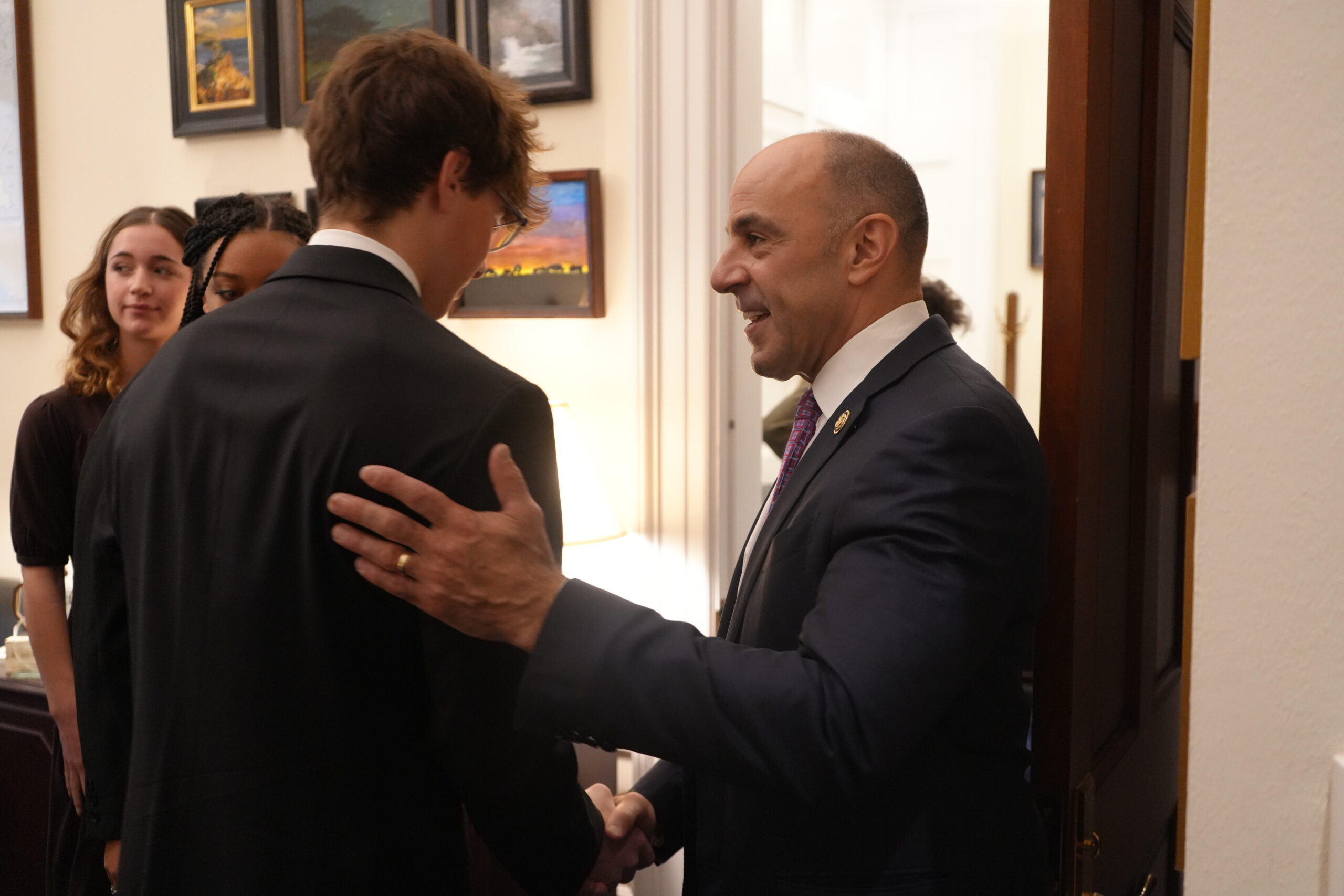
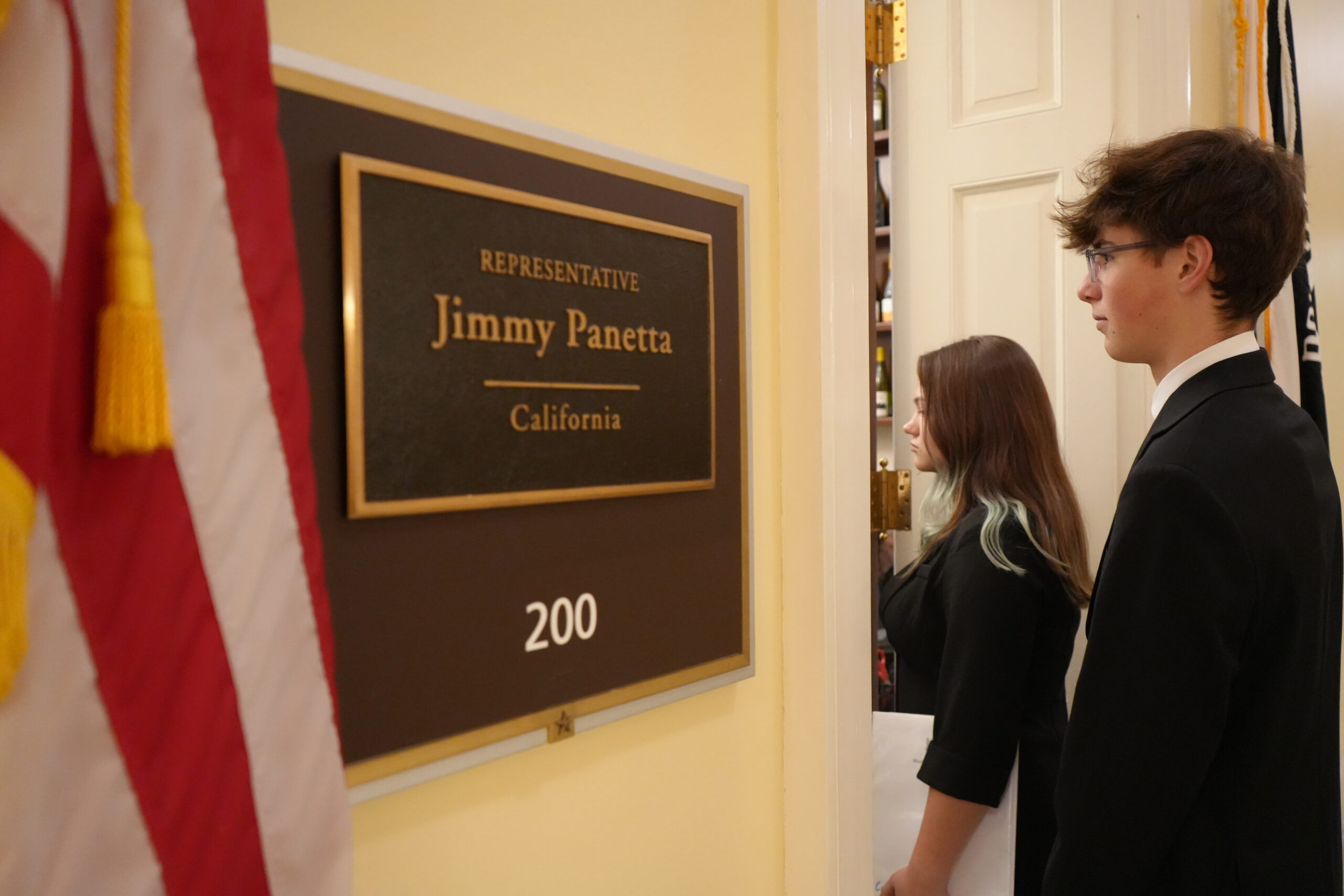
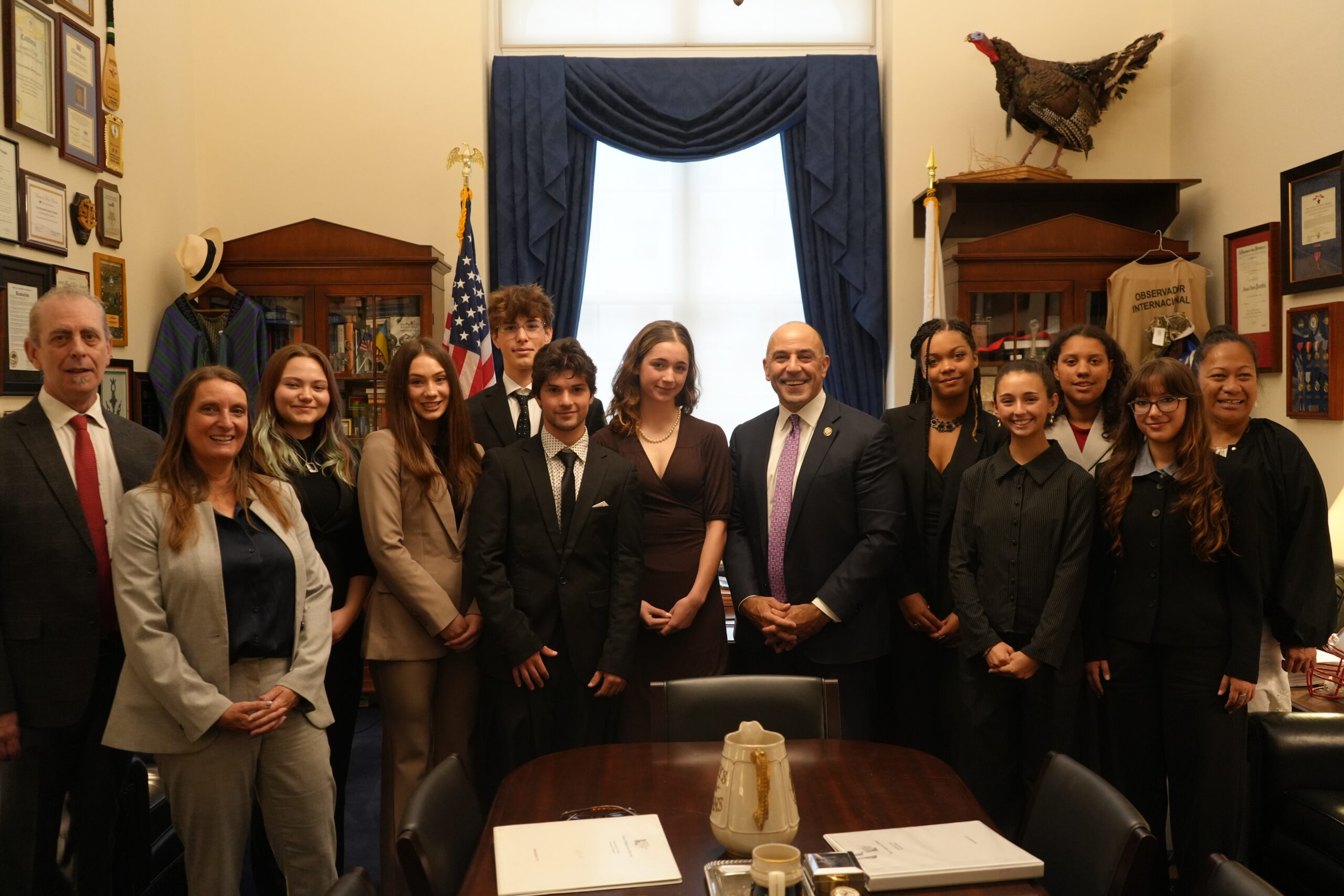
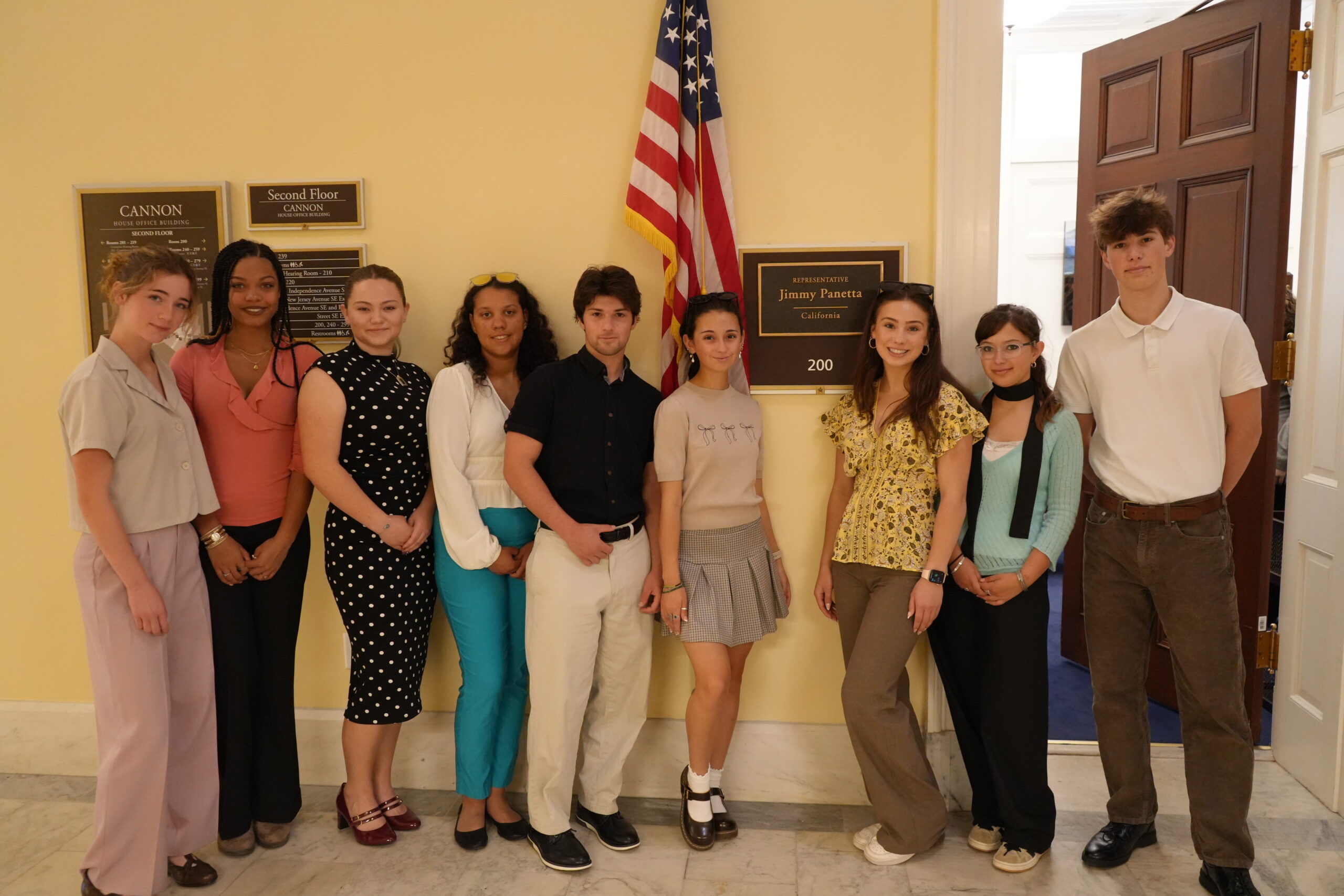
Today we interviewed Congressman Panetta. This was a formal interview and very different from our time with Valeria. When speaking with Mr. Panetta, it was clear that he is an important figure, and we were fortunate to speak with him. Going through security to get into the Cannon Building was exciting yet extremely nerve racking at the same time. Entering Congressman Panetta’s office, we could see trophies and awards lining the walls of his lobby, and the medals and awards continued inside his actual office. He was kind and genuine when answering our questions, and it was clear that he has a lot of personality. He was clear when speaking to us, knowing exactly what he was going to say and how he was going to say it. He shared with us stories about his past and the unexpected turns that led him to where he is now. He also shared his hopes for the youth in government and for our future, and that he is inspired to see how driven we are as young people in America.

I learned so much about government and the people who make it function by interviewing Valeria and Congressman Panetta. I felt that I was gaining insight in real time into how change in government happens. I also learned how important it is for those elected to positions in government and those who choose to work outside of government to work together to create change. Both interviews were very informative and inspiring, and I am very excited to see what the coming interviews hold and what other learning opportunities I will gain on this trip. 


Solomon Coleman

Never Let the Grass Grow Under Your Feet

Waking up earlier this morning to make our early meeting made the day seem a little bit more daunting. When I’m nervous I always think about how nervousness and excitement affect your nervous system in the exact same way. When you think about it like that you can trick yourself into thinking that you’re just excited and not fearful. 

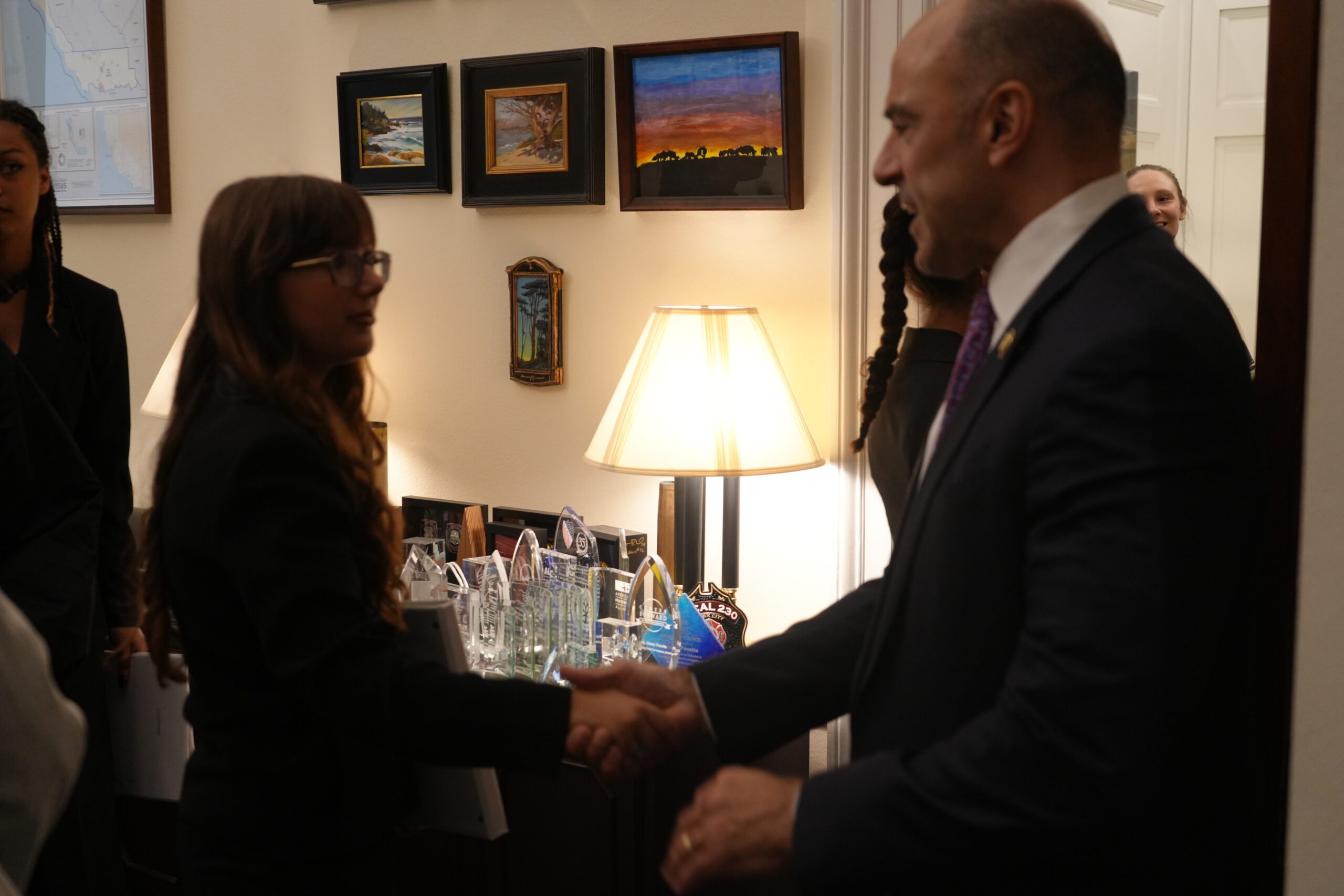
Stepping into the Cannon Building for the second time, we knew where we were going but not what thoughts and ideas we were going to find there. Congressman Panetta’s office had more people working in it than I would’ve thought, which made me realize how much work is really being done every day in there. Mr. Panetta opened the door to his office and invited us in, with an extremely warm and charismatic smile. I got the impression that he could make a friend out of anyone, so I wasn’t surprised to hear that he holds the title of “most bipartisan member of Congress.” That was something that really resonated with me. He emphasized that the importance of government is to work together to achieve a common goal. One of my favorite quotes from him is “Never let the grass grow under your feet.” That quote applies to almost every aspect of my life and everyone else’s. He wanted us to know that no matter where we are in life we need to keep moving forward, keep making progress, but also progress as a society.

Something else he shared with us was a story about a pivotal moment in his career. He spoke about a time in his life when he was a District Attorney, his wife was a Judge, and his kids happily went to school in Oakland. He said that there was nothing wrong with that life whatsoever, but something inside him was opposed to “plateauing.” So he took a leap, started working in his hometown of Monterey, the place to which he owed his identity. This story drove home the idea that to live well is to strive for something greater, and when you have achieved your goals, to find new ones.


Mariska Goldstein

The Whole World Ahead of Me

Today my class and I had the great privilege of interviewing Congressman Jimmy Panetta, from California’s 19th Congressional District, where most of us live. My first impression of Mr. Panetta was that he is more laid back, vulnerable and welcoming than I expected. He shook every one of our hands and made us all feel comfortable. I was very happy to hear him open up the meeting by telling us that our role in the future is vital, and that he was excited to meet with us. He said that what gives him hope is that he sees our generation as smart and driven.

What stuck with me most after leaving this interview was all the different places and environments he has worked in throughout his life. He has worked as a researcher on a NOAA vessel, a State Department clerk, a prosecutor, a U.S. Navy Reservist, and now a member of the U.S. House of Representatives. In many of these jobs he was very happy and could have lived what he said was a great life, but he found himself wanting more, and he challenged himself to work harder. He referenced something his mother always used to tell him: “Never let the grass grow under your feet,” to take every opportunity before you. His remarks make me think of my future and that maybe I don’t want to work in fields I’ve always thought I would enter. Maybe there’s more for me out there, maybe things I’ve never thought or known about. Mr. Panetta didn’t originally know what he wanted to do, so hearing about all the things he’s done since then is very inspiring. I leave this interview now not worrying about what field I want to go into, but excited and optimistic. I have the whole world ahead of me.


David Monclus

Living the American Dream Means Giving Your Kids a Better Life

Today we interviewed Congressman Jimmy Panetta, who represents our district in Congress. He is considered the most bipartisan member in Congress, and he had many interesting ideas. He strongly believes in serving his community and was raised to value hard work. While in college, he worked a full-time job to pay for his education, so he understands managing money and its importance to achieve a goal. 

One thing that came up often throughout our conversation was “the power of the purse.” Everything that he does starts with the people’s needs, but a big part of his job is getting government funding in order to finalize ideas or projects.

He also explained that not everyone in Congress agrees on every issue, which is expected. However, he believes that evidence and facts in the long run beat emotion. So once set on a goal, he strives to work with as many people as he can to make people understand the advantage of what he is trying to accomplish. 

He also seemed very patient and laid back, even though he is extremely busy. Our interview ended a little early, but with every question we asked, he took his time to answer with extreme detail and, more importantly, with care. He genuinely cared about the answer he gave and the questions we asked. He also expressed hope in us, the younger generation. He said that one of the things that keeps him motivated is the belief that “living the American dream means giving your kids a better life.” He understands that everything done today is to support the next generation. 

When he was our age, he didn’t know what he wanted to do, but through effort and opportunity, he got to where he is today. He shared that same hope for us, whether we already know what we want to do or not, giving me confidence to make decisions in the future. 

Inside the Capitol: Art, History, and Awe

Cameron King

Architecture on Capitol Hill

Throughout my life, I’ve always been entranced by large and intricate buildings, and the Capitol building was no different.

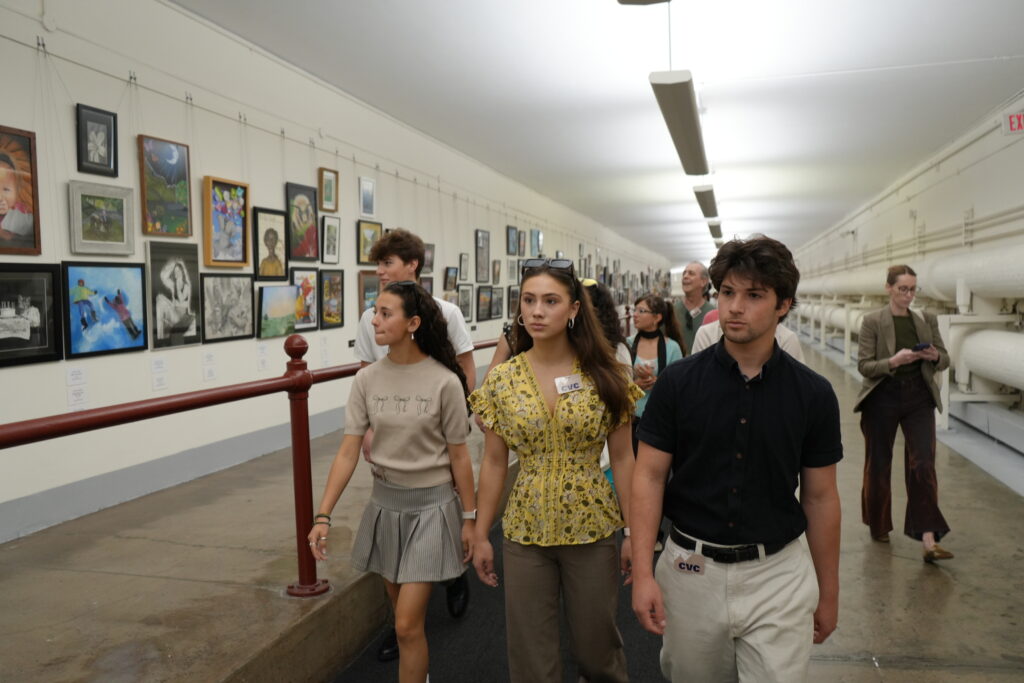
Today we took a tour led by Jimmy Panetta’s aide, Sofia, around the Capitol. We started the tour at the Cannon Building and took the underground tunnel to get to the Capitol itself. Sofia showed us the original parts of the building, including the original House and Senate rooms that were used in the early 1800s. We were able to see the original entrances to the Capitol building, which was enlarged considerably over the years. We also saw where the walls were damaged by bayonets when British troops stormed and burned the building during the War of 1812.

One of my favorite fun facts I learned on the tour is that if you stand in one of the small Senate rotundas against a certain pillar, you can see a trail of tiny cat paws leading away from another pillar. The story is that this “Demon Cat,” otherwise nicknamed “D.C.,” shows up before national tragedies, as per the tale from the 1860s. According to lore, the cat appeared to night watchmen before President Lincoln’s assassination, before the 1929 stock market crash, and before the JFK assassination. These prints likely appeared from one of the many cats they kept to deal with rodent problems.

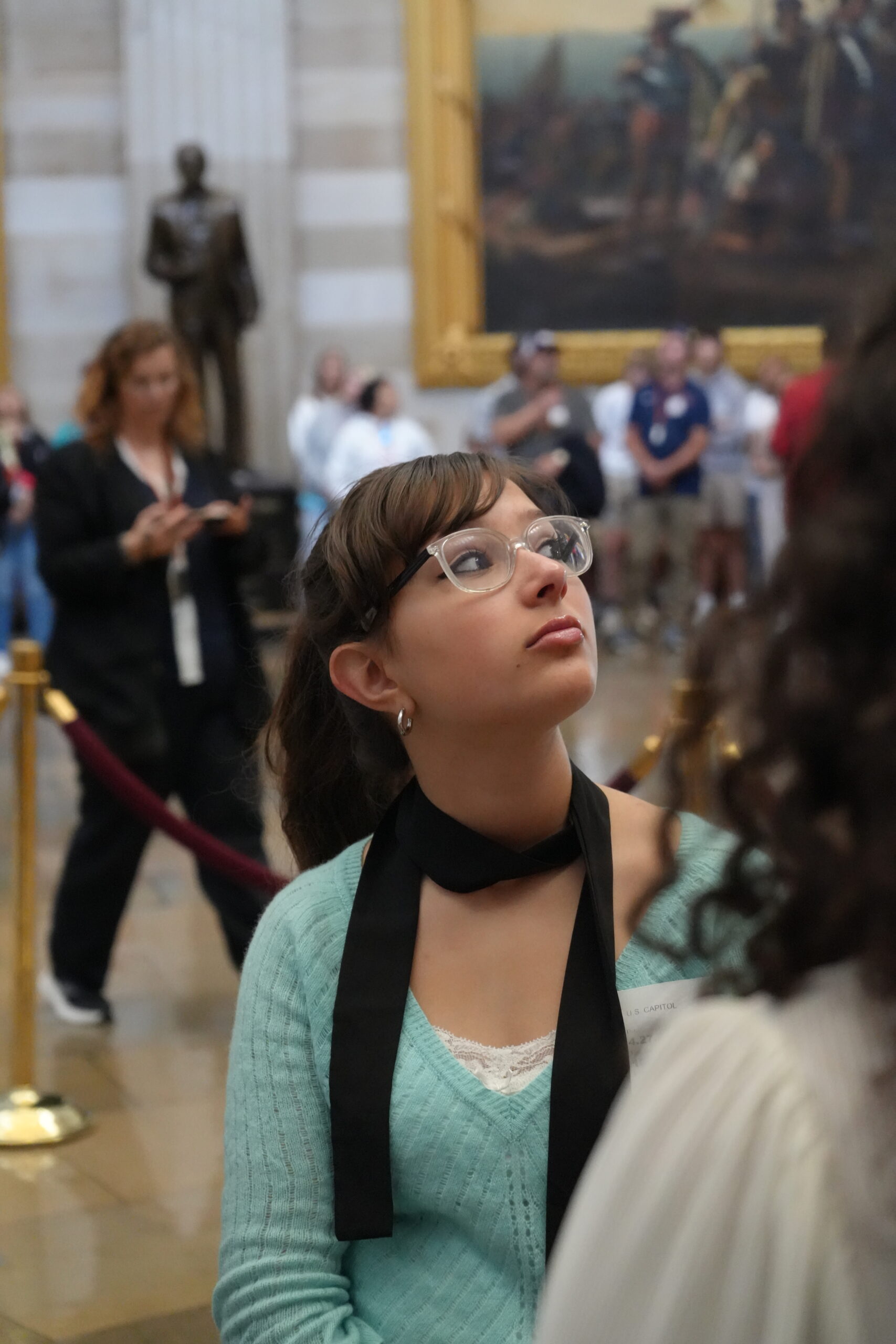
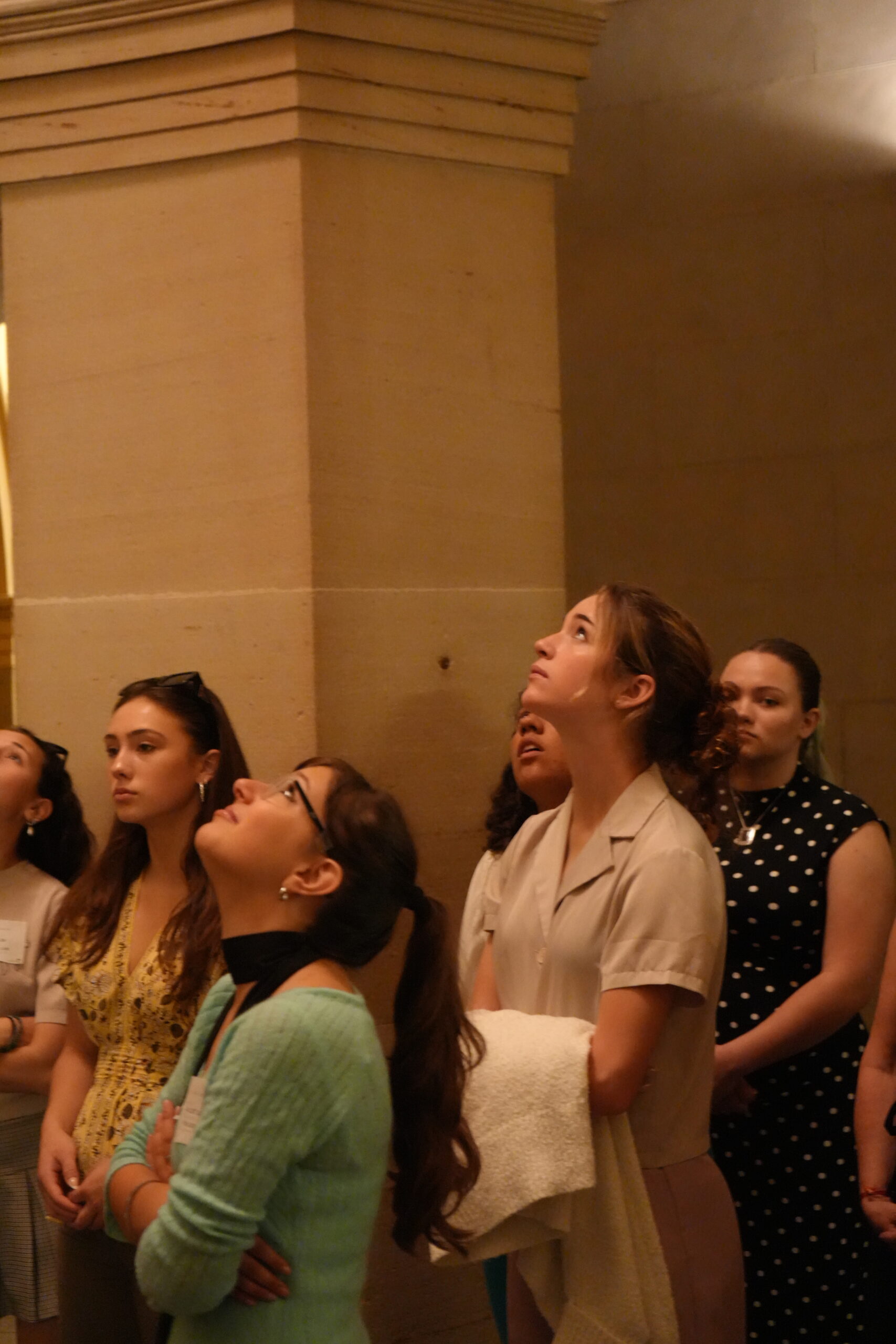
We then made our way to the main rotunda, which is the largest part of the Capitol by far, and which has the most intricate and detailed architecture I have ever seen in my life. As I walked into the space, I noticed all the paintings along the walls that I have always seen in history books. Then I noticed the statues of important figures that lined the walls. Interestingly, the statue of Ronald Reagan has a strip of the Berlin Wall embedded in the base of the statue. The ceilings are made with 8.9 million pounds of cast iron that was made to look like marble. Some comparisons put things in perspective: the ceiling is 288 feet tall, which is 2.59 Statues of Liberty tall, or 1.8 widths of a football field, slightly less than half a Space Needle. There are also 108 windows that line the base of the dome and illuminate the entire rotunda. Seeing a building this large and historically important reminds me of how small my world is compared to the centuries of history that have passed before I was ever born.


Mariska Goldstein

History in the US Capitol

The US Capitol is filled with more history, art and importance than I could have ever imagined. Our day started at the Cannon Building, where we met Sofia, a young woman still in college working as an intern for Rep. Jimmy Panetta. She is from our home town of Santa Cruz, and she graduated from a school I’m familiar with, and had a high school life similar to mine. I found her story very inspiring, as it reminded me of all the different ways I can choose for my life to unfold and how many opportunities I can have if I put myself in the right places at the right times.

Sofia then took us through an underground tunnel that leads into the Capitol itself. As the tour continued through the grand halls, past the beautiful architecture and statues, I was filled with enthusiasm and excitement. It seemed as if every room I walked into was bigger and filled with more art than the previous room. There was something to look at and learn about everywhere, from the tiles on the floor to the paintings on the ceiling, and every inch in between. Everything had its reason for being there and its own meaning hidden in its details. I particularly liked the sculpture of Abraham Lincoln’s face, which is said to be the most accurate depiction of his face, which showed a stressed expression. Usually, I wouldn’t have thought twice about it, but Sofia informed us that it was because of the chronic stress created by the Civil War.

I walked out of this tour feeling fulfilled, fascinated and grateful for such a great opportunity. As a person who has never had much interest in learning history from a textbook, I now understand what I’ve previously read in much greater detail, and I am now much more interested in it. 


Noa Zands

Depictions of Deities

On the second day of our trip, we visited the Capitol. I have been once before, but this time I paid special attention to the art in the building. Much of the paintings and sculptures depict presidents, pioneers, and other historical figures, especially George Washington. He was treated almost like American royalty.

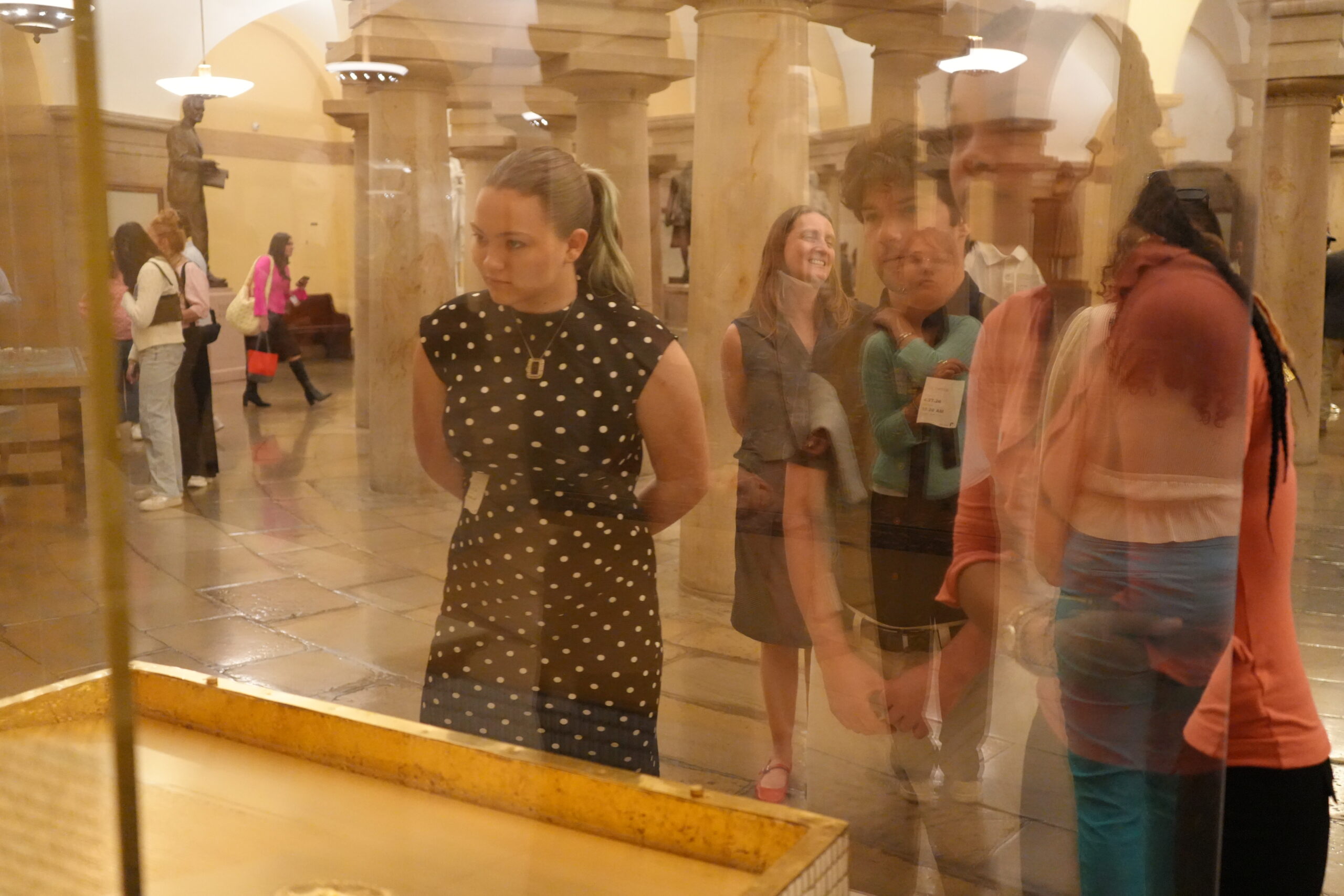
One thing we saw was the casket he was supposed to lie in after he died. However, he died before workers finished the Capitol, so he was never placed there. The space occupied by his casket reminded me of how Egyptian pharaohs were buried in pyramids, or how temples were dedicated to Roman warriors. Many of these great figures are depicted in the building, and almost every room has a statue of a god of freedom, a god of justice, or, as in the Capitol Rotunda, the Apotheosis of Washington, which shows all of the Greek gods surrounding a robed George Washington and other founding fathers. This Italian Renaissance-style painting is one of many in the room that depict scenes important in the history of America, all with the grandeur usually seen in paintings of deities.

Since all of these historically important figures are just people, it makes you wonder if George Washington would have wanted to be depicted in religious terms. The painting Baptism of Pocahontas reminded me of the Coronation of Napoleon, which was painted merely forty years before. Several interesting points arise. Its resemblance to the painting of Napoleon is a nod both to the era in which it was created and to our country’s European roots. The historical elements of the painting are important too, because although Napoleon was a good general, he was not a great man, and although the Europeans colonizing the Americas did found our nation, the actual history of it is far grimmer than is usually thought. All of the original statues in the building are of fighters, all people who made a mark on the nation, even if they caused a lot of damage along the way. An example is Christopher Cololumbus, who is featured repeatedly. Another example is Father Junípero Serra, whose statue represents our state. After a while, it becomes clear what kind of people the country has traditionally chosen to represent itself. I do believe that there is a slow change being made, as the newer statues are of figures such as Rosa Parks, Martin Luther King Jr, and Barbara Rose Johns. So, maybe there will be a shift in the artwork that appears in the Capitol, with less worshiping of gods and more respecting people.

Navigating Misinformation, Demanding Representation, and Imagining a Future in Politics

Romy Sirk-Traugh

Don’t Believe Everything You See Online

Today we interviewed a smart woman named Valeria Ojeda. She’s part of CHC BOLD, a political action committee (PAC) that specializes in helping Hispanics in politics.

One of the main themes she talked about is utilizing social media. Social media plays a big role in how I understand politics, and after this interview I realized that it can be both helpful and dangerous. I use social media a lot, and many times I find myself believing what I see without really questioning it. I have realized that believing everything I see online can be dangerous. There is a lot of misinformation, and sometimes posts are designed to get attention rather than tell the truth. If I do not take the time to check facts or look at different sources, I can easily be misled. Ms. Ojeda emphasized the importance of using social media if you are not watching or reading the news from traditional sources. I now think it is important to be more responsible with how I use social media. I want to take time to question what I see, look for reliable sources, and think before I believe or share something. Social media is powerful, and it can be used in a positive way, but only if I use it carefully. Overall, today’s interview has helped me realize that I need to be more aware and make sure I am not being influenced too easily by what I see online. I was really lucky to interview Ms. Ojeda, as the interview meant a lot to me. I am now looking forward to our next interview and asking questions to learn about that person’s experiences.


Gianna Clayton-Holmdahl

A Diverse People Require Diverse Representatives

Today we went on a Capitol tour, interviewed Chelsea’s friend Valeria Ojeda from CHC BOLD PAC, and visited the House of Representatives gallery. Throughout these experiences, I started to notice how limited diversity and representation can feel in our government. During the Capitol tour, I saw a lot of older white men in positions of power, and when I visited the House of Representatives gallery, that observation felt even clearer. There were mostly older white men, with only a few women present, and they also appeared to be older.

According to NBC, with “an average member age of 58.9 years old, the 119th Congress is the third oldest since 1789.” This fact raises concerns about how well Congress can keep up with a rapidly changing world. Technology, social norms, and global challenges are evolving faster than ever, and younger generations are often at the forefront of understanding and adapting to these shifts. While experience is valuable, an overrepresentation of older lawmakers may limit how quickly new ideas, especially those related to technology, climate, and modern social issues, are embraced. A Congress that includes more representatives in the 30–40 age range could bring fresh perspectives, greater familiarity with emerging technologies, and a stronger connection to younger constituents. By balancing experience with innovation, a more age-diverse Congress could better position the country to move toward a more equitable and technologically advanced future.

As a younger person in this generation, I feel like the things that need to be changed and said are not being said, or things that are being done will not be beneficial to the younger generation when they grow up and take over government. However, I do see some people are really trying to change things. For example, we visited the House of Representatives gallery, where representatives were discussing H.R.7959, which would implement more technology into the IRS to make filing taxes easier, more efficient, and easier to understand. My experiences today made it clear that for the government to represent the people it serves, it must continue to evolve by including a wider range of ages, perspectives, and lived experiences.


Delmi McWilliams

Careers on Capitol Hill

Today our class visited Rep. Jimmy Panetta’s office and met Sofia, an intern in his office. She was insanely knowledgeable. Despite only being a junior in college, she navigated the Capitol like a senior member of Congress, full of interesting facts and opinions. As we walked through the building, looking around at the historic figures lining the walls, I felt a rush of ambition. People who have passed here have made considerable changes to our society that’s left a lasting impact in a true, real way. Sofia talked about the people who have worked themselves half to death in the same halls that are now decorated with their names in gold. We stood in the same places where historically important who created our government have stood. Being there and hearing Sofia speak increased my ambition for a career in politics.

I spoke to Sofia about the path she had taken to get where she is now. Her responsibility is awesome! She looks over memos sent to the congressman, and she writes recommendations for and against bills. It all sounds so interesting and fulfilling. Her specific interest is in healthcare policy, and her internship has given her the connections to pursue her career. I realized that is exactly where I want to be. She also talked about the difficulties in securing an internship as an undergrad. I think such a collegiate program would be super rewarding. She encouraged us to reach out to our congressman, and she talked a bit about how Rep. Panetta loves getting mail from high school students. She really made me think about the necessity of networking, developing confidence, and taking advantage of every opportunity. Since I hope to end up here on Capitol Hill, it is really helpful advice.

Later, we met with a friend of Chelsea’s, Valeria, who has a leadership role in CHC BOLD PAC. Her job is to support Hispanics running for office. She works closely with media groups, politicians, and private companies. When interviewing her, I couldn’t help but ask questions about her career. Again, it sounds so enviable: the problem solving and the importance of it all. Her work results in lasting contributions to her community and society as a whole. The interview was wildly inspiring. Both she and Sofia said the same thing: if you want to work in public policy, you must network, network, network.

After lunch, we visited the House Gallery and observed Congress in session. There was no debate. Instead, the discussion was bi-partisan: they unanimously supported a bill that would streamline the IRS by updating its technology. It sounds extremely boring, but I loved it. We were watching policy being made, actual decisions that affect the way we live our lives! If the bill passes Congress and is signed by the President, filing taxes will no longer be a huge hassle, but will be no worse than scheduling a doctor’s appointment. While I had never considered running for elected office, I now see the appeal. These people are not necessarily influential in ways that are obvious. They work behind the scenes, shaping the world we live in. This idea seemed to be today’s theme. I want to be able to make connections with people, and I am so very excited to take advantage of opportunities as Sofia and Valeria have done. Wish me luck!


Solomon Coleman

Money and Priorities in Washington, D.C.

The way that public money is spent in Washington, D.C., is very wrong, in my opinion. While the streets are clean, and the buildings so magnificent it’s shocking, there are better things we could be spending money on.

We went on a tour through the Capitol building to start the day, starting at our representative Rep. Jimmy Panetta’s office in the Cannon Building of the House of Representatives. Walking towards the building we saw the National Guard standing around in groups of four. We’d seen them around before, none of them ever up to anything more than talking amongst themselves and watching the public suspiciously. It made me wonder how much money goes to law enforcement. It also made me wonder why they are out here, when the biggest catastrophe I’ve seen since I’ve been in D.C. was a scooter accident. It felt like every block here is a police car, and every cop I’d seen that wasn’t actively driving was on the phone. I wonder about the money the president has been spending on law enforcement and the amount of crime that has been committed since he was elected.

After the tour we had our first interview, which was less formal than usual. We spoke with Valeria Ojera, a young woman who works in communications for a political action committee that helps Hispanics get into leadership positions by aiding campaigns and writing press releases to increase the visibility of candidates. I learned from her that many people working in the media for political causes will flat out lie or badly bend the truth to promote an opinion. She described a recent example in which a quote was made up and published in order to hurt the reputation of a congress member supported by her political action committee. She shared that there is no way to stop or take down advertisements like those without going through a long and expensive legal process. Hearing this sort of story made me realize that the money that should be used to create a government that genuinely represents the people of America is really being used to pay police to stand around, talk on their phones, and allow people to lie to us in the media without repercussion.

Beyond the Textbook: The Lives That Built America

Romy Sirk-Traugh

African-American History Is American History 

Today we took the “African-American History” Tour. I put the title in quotation marks because the main theme of the tour is that there is no difference between “African-American” history and “American” history.

I have never really been very interested in US history, so I was surprised to learn about the central role that African-Americans have played in our history. Elvis, our tour guide, told us several times that what he was saying about “African-American” history was no different from what he would say if he were talking about “American” history.  When I think about World War One or the Vietnam War, I often think only of who won. On this tour, I was able to take a deeper dive to learn more about who was fighting and why. I learned that 300,000 African-Americans fought in the Vietnam war and that even more fought in World War One. Before the tour, I also had no idea of the impact African-Americans have had on the history of Washington, DC, itself. For example, I learned about Philip Reid, an African-American sculptor, who had been enslaved, who designed the Statue of Freedom atop the U.S. Capitol and was emancipated on April 16, 1862.

This tour really changed how I see “American” history. It showed me that African-American history is not separate, but a central part of the whole story. I learned that history is more than just events, that it’s about the people who shaped this country, whose lives have made a real difference in the lives of Americans.


Victory Gulizia

Monumental Neglect

Today we took the African-American History tour, which took us around many of the memorials and monuments in DC. As we walked to where our tour started, we passed the Capitol, which is a beautiful piece of architecture. Walking up to the building, I realized, “I’m really in DC,” this place where so much history has taken place and is still taking place. We also passed the Library of Congress and the Washington Monument. When we arrived at the tour bus, it was apparent that our tour guide has a special connection to the topics he was talking to us about. He talked with such passion and deep personal understanding that was very different from learning something from a textbook. I felt as if my grandmother were telling me a story. Once we got on the bus, one of our first stops was the Lincoln Memorial. I gazed in awe at the building. I have seen many pictures of the statue and the reflection pond when Dr. Martin Luther King, Jr., gave his “I have a Dream” speech. We got to see where he spoke on the steps. It was like stepping into history. The Lincoln Memorial was serene, even with all the people inside and on the steps. The room was grand and beautiful. That it was so clean made it clear that it is an important place.

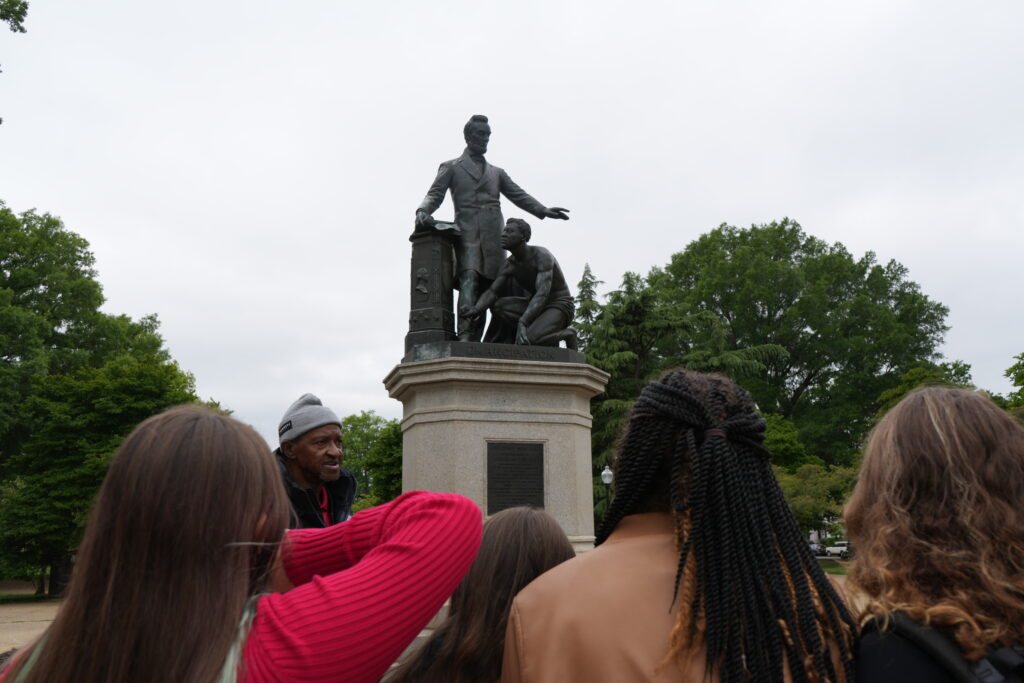
As the tour continued, we saw several other monuments, including the Martin Luther King, Jr., Memorial, which was also very grand and very serene, depicting Dr. King facing the tidal pool as he “emerges” from a block of stone. However, in contrast to the clean settings of the Lincoln Memorial and Martin Luther King, Jr., the neighborhood containing the Emancipation Memorial and the Mary McLeod Bethune Memorial almost seemed hidden from the public. They are in Lincoln Park, a small block-long park in a residential area. Our tour guide told us of the controversial history of the memorials. Not only do these memorials feel more secluded, but the quality and representation of the statues are very different from the Lincoln Memorial and Washington Monument. These two monuments sit in large, open and mostly empty spaces, making it clear that they are the centers of attention. Furthermore, the areas around them are kept as clean as possible, in contrast to the dog park where the Emancipation and Mary McLeod Bethune memorials sit, which seemed almost run down by comparison.

Near the end of the tour we saw the African American Civil War Memorial, which was very impactful for me. Seeing all of the names of African-American soldiers killed in the Civil War was very sad and eye opening. Something else that caught my attention was the dirtiness of the area around it. For example there was an empty Sprite can laying on one of the rows of names. Even though this disrespect may not have been intentional, it is clear that the way our country honors our African Americans soldiers and leaders is something less than how it honors white soldiers and leaders. The lack of care taken with the areas around the African-American memorials and monuments, either consciously or unconsciously, represents the way our nation has treated African-Americans. Something our tour guide Elvis said that has stuck with me is that “African American history is American history.” America was built on the backs of African-Americans, and I think that these beautiful memorials and monuments should be treated with greater respect and care. 


Mariska Goldstein

The Struggle for Civil Rights Never Ends

Many people tend to think about civil rights only as something to be studied as history. People often talk about where we’ve come from and how things have changed. However, the struggle for civil rights wasn’t just people taking action to protect their rights in the past; it is something that continues as we work towards achieving goals that have yet to be met. I thought about this idea a lot as I toured the National Museum of African American History and Culture. The museum has so many exhibits that it takes four floors to cover African-American history. Every turn reveals a different era and set of experiences. Walking through the museum, I viewed exhibits from the 1400s to the present. In one exhibit, I read about Jim Crow laws. What stuck most with me is that Jim Crow laws were in place all the way up until 1964, which is pretty recent, just shortly before my parents were born. This fact really puts into perspective how long it takes to make change. 

Racism isn’t gone; it’s just changed. It still exists in the ways people treat each other, and in the ways we act and perceive people. According to Racial and Ethnic Disparities,  “Black adults were incarcerated at a rate of 600 per 100,000, while white adults were incarcerated at 184 per 100,000.” In California, one in five people with convictions “met criteria for full conviction relief under the state’s automatic relief laws” even though “the share of Black Americans eligible for relief was lower than White Americans.” So, yes, we are not in a time of slavery or apartheid, but we are still in a time of desperate need for change. Racism isn’t gone; it’s just disguised and harder to identify. 


David Monclus

Whatever You Do, You Have to Keep Moving

On our first day in D.C., we didn’t have any interviews. Instead, we visited the Smithsonian’s National Museum of African American History and Culture.

The museum has four floors, and Shannon advised us to work our way up from the first floor, since each level tells the history of African-Americans and their experience in this country. The first floor focuses on how Africans were brought to America and the way they were treated once they arrived. Some of the exhibits were difficult to view. It’s impossible to fully understand what other people have lived through, but it’s important to acknowledge that history so it is never repeated.

Because I was running out of time, I skipped ahead to the fourth floor, which I had been looking forward to the most. This level—the Culture Galleries—felt completely different. Calling it “culture” feels like an understatement. The art, music, and expression went beyond just one community: it connected to so many others. It showed how deeply African-American culture has influenced visual art, music, and theater across the world. When I walked into the Musical Crossroads exhibit, the contrast from the earlier floors was striking. It was full of life: people celebrating, artists performing, and energy flowing everywhere. It represents hope, and it shows how far a community of people has come, and how much further they can go. That sense of progress and determination is inspiring. This experience reminded me of a quote by Martin Luther King Jr.  “If you can’t fly, then run. If you can’t run, then walk. If you can’t walk, then crawl, but whatever you do, you have to keep moving.” The museum captures that idea perfectly: acknowledging the errors of the past while continuing to move forward into a better future.


Delmi McWilliams

African-Americans: Creators of American Music

Today, we took the African-American history tour of DC. The city is full of culture and history. As we traveled through the city, we saw how African-Americans are a central part of that culture and history. There are so many things that we attribute to “American” history and culture that were contributions from African-Americans. Our tour guide, Elvis, shared with us a quote from George Washington, who, when asked why he owned slaves despite believing in equality, said, “What would I do without them?”

We ended the tour at the National Museum of African American History and Culture. It is beautifully curated, with compelling exhibits, and it has great food! I have a personal connection with music, as I think of it as one of the most “human” things of which we are capable. So, of course, I found the music and culture exhibits amazing. They showcase African-American art, dance, film, writing, poetry, and music. There were images of ‘60s girl groups like The Supremes, and recent pop icons like Nicki Minaj. It was a beautiful representation of how much our American culture has been created by African-Americans. 

Many people think of Europe as the birthplace of Western music. For example, Norway created opera, and Germany created electronic music. But a majority of musical genres that we know and love today were created by African-Americans. In the era of slavery, music and dance were forms of creative expression that defied oppression. While enslaved peoples were treated as property, they could still find a way to take back their bodies and identities through artistic expression. Enslaved African-Americans created blues, ragtime, jazz, doo-wop, gospel, soul, funk, rap, hip-hop, R&B, and what would eventually become country music. African-Americans such as Chuck Berry also created rock and roll in the 1950s. After years of struggle, slaves were eventually emancipated, but African-Americans still faced horrific prejudice through Jim Crow laws, lynch mobs, and systemic racism. Still, African-American culture has never stopped shining.

Truly, every American music genre we now have was created or at least influenced by African-Americans. This tour showed us how much of our culture we owe to those who have faced oppression and hardship. As we drove through the neighborhood around Howard University, we saw images of African-American veterans behind glass that had been shattered by rocks. It was fascinating to see the beauty and richness of African-American culture as it was created out of hardship, defiance, and resilience, and to see how the diverse music genres we know and love today came to be.


Solomon Coleman

Looking Past the Myth to See the Truth

Today was the first full day of the long-awaited Washington, D.C., trip, and it did not disappoint. My feet are already feeling all of the day’s walking.

Seeing all the statues that reflect the evolution of American history is really profound. Sculptors have shaped metal to show the world, today and into the future, what happened in the past. Something that I really love is that through these monuments you can see how the country was in the past, and you can see the obvious biases in our predecessors’ thoughts and opinions. The tributes they created cannot be changed so that they don’t reflect those biases. We also learned more about the reluctance of the country—especially in the Civil War border states Maryland, Kentucky, Delaware, and Missouri—to emancipate the slaves. An example is the Emancipation Memorial, which shows Abraham Lincoln and Archer Alexander, one of the first slaves “freed” after the signing of the Emancipation Proclamation. However, some sources say that Archer Alexander was never really freed by Lincoln, but had to fight in court to earn his freedom. Archer is depicted without pupils, as if he is blind, on his knees, as Lincoln, with pupils, stands above him. I had always thought that Lincoln’s goal was peace and freedom, but today’s tour of DC opened my eyes to the need to be critical of my previous conceptions. Our tour guide shared a powerful quote with us that I want to share with you. Someone asked Lincoln, “If there were any other way to save the union than freeing the slaves, would you do it?” Lincoln’s answer: “I would.” Lincoln said.

Please take my advice. Remain critical of whatever you hear and see, and you’ll discover what really is.

2026 DC Learning Journey Begins…

Shannon Kelly, Values Program Director

On April 25th, the Mount Madonna School (MMS) junior class, along with the Values in World Thought Program Leader, Shannon Kelly, and chaperones Greg Shirley, Chelsea Otterness, and Masina Hunnicutt, will travel to Washington, D.C. The week will be filled with tours and interviews with an array of individuals, such as Congressman Panetta, Mary Ford, VP of Root and Shoots, and Founder of Running Start, Susannah Wellford, a long-term supporter of the Values In World Thought program. You can find a full list of individuals we will be speaking with on our blog. 

The Government in Action program was started in 1989 by Sadanand Ward Mailliard. Over the years, Mount Madonna School students have been fortunate to meet and interview some of our nation’s finest public servants. The Washington, D.C. learning journey is an integral part of the “Values in World Thought” program at Mount Madonna School. This unique trip to Washington, D.C. provides MMS juniors with a direct personal experience of those who devote their lives to public service. 

In a time of division, the Government in Action program provides our students the opportunity to actively listen with open minds and hearts. We believe that we can positively impact the world by engaging in conversations of meaning, being curious, and being open to learning from people with different perspectives and lived experiences. 

Students will write and share their reflections on the blog. Please follow along here!